Wednesday, February 28, 2007

Yoga Teacher Training: Introduction to the Yogic Energy Body


By Paul Jerard, E-RYT 500

In Yoga, and Ayurveda, the Yogic body is composed of three bodies. One is the physical body (sthula sharira), which we can easily see. Another is the causal body (karana sharira), which we often refer to as the soul.

The energy body (sukshma sharira), is often called the subtle, vital, or Pranic body. This is very often a mystery to many, and confusing to more, but let’s take a tour of the energy body and you will understand it much better.

If someone does not believe in the existence of the energy body - I would ask how the physical body runs without electricity. Without electricity, we would have heart failure, and very big problems, if our hearts are not restarted.

How is the heart restarted? Sometimes CPR is enough, but most often CPR helps just long enough for a defibrillator to be used to restart the heart. The defibrillator causes low voltage electric current to enter the body through paddles or patches, which are then applied to the chest.

At the atomic level, your body is full of electrons, flying all over the place, and some are flying around the body. We cannot see it, but we know it is happening. How is this? We have faith in science, but science cannot measure everything.

For centuries, Ayurvedic doctors, and doctors of Chinese medicine, mentioned the electro-magnetic body, but western medicine scoffed at the idea of it. How could there be energy meridians? Does acupuncture really work or is it a “side show?” How come the energy meridians of Chinese medicine line up with the Nadis of Ayurvedic medicine?

Time has passed, and western medicine has now started to work in harmony with Ayurveda and Chinese medicine. Maybe there’s something to the Yogic energy body after all. So, what are the main parts of the Yogic energy body?

Nadis (Energy Meridians): There are 72,000 Nadis in the electro-magnetic body, which send vital energy (Prana) from one point to another. Shushumna, Ida, and Pingala are considered the most important to Yoga students - although, 14 main Nadis should covered, when this subject is covered during a Yoga teacher training intensive.

Marmas (Pressure or Energy Points): There are 107 Marmas, and some say 108, but they can be effectively treated for healing purposes. Unfortunately, they can also be considered strike points in martial arts, but these energy points correspond, regardless of the purpose.

Chakras (Energy Vortices): There are seven main chakras, which transform magnetic currents of the earth into energy of the physical body. This physical energy balances the central nervous system and the endocrine system. There are also many secondary and minor Chakras.

© Copyright 2007 – Paul Jerard / Aura Publications


--------------------------------------------
How to Become a Certified Hatha Yoga Teacher
--------------------------------------------
FREE Yoga Report. FREE Yoga Newsletter.
Bonus: Free Yoga e-Book, "Yoga in Practice."
http://www.yoga-teacher-training.org/docs/Yoga-in-Practice-eBook.pdf
Visit: http://www.yoga-teacher-training.org/
Affiliates: http://www.yoga-teacher-training.org/signup.html
On-Site Training: http://www.riyoga.com/
--------------------------------------------

Tuesday, February 27, 2007

Yoga Teacher Training: Becoming a Yoga Teacher after 40


By Paul Jerard, E-RYT 500

There are so many Yoga students over 40 years of age, who desire a knowledgeable, mature, and careful Yoga teacher. Many beginner Yoga students are 40 years of age or more. In my Chair Yoga classes, many new Yoga students are over 65.

How is it possible that a veteran student with decades of experience and practice cannot see his or her self-worth, as a Yoga teacher? Where does this self-doubt originate from? Could a young Yoga teacher graduate understand the pains, aches, medical conditions, and limitations of older students?

Quite simply, a Yoga teacher graduate over 40 years of age has the major advantage of life experience. This is not meant to take credit away from young, compassionate, and well-trained Yoga teachers; but how many of them can understand working around physical or mental injuries from experience.

Let’s make a comparison of the human body to an automobile. When you are a young driver, you really learn about auto parts the hard way: When they break down and cost you money. Your friends will also tell you about their experiences with auto maintenance. You can sit in a class and learn about auto mechanics to your heart’s content, but the lesson is not the same.

Time and experience are an education. Now, your Yoga students are not automobiles, but life’s lessons are very valuable when teaching Yoga. Your previous life experience is a treasure when working with your Yoga students.

So, what does hold some experienced Yoga students back from becoming a Yoga teacher? If you have been on this earth for a while, you have experienced more failures than someone who is decades younger. Past failures sit deep in our memory and haunt us - even when we know we should act.

This is a good time to examine your self-worth and realize how often the “skeletons in your closet” are holding you back from taking action. Youthful exuberance is an advantage, when making decisions within a given “window of time. Yet hasty decisions can be avoided, when you research the demand for your Yoga teaching services.

If there is no demand, there is no point in becoming a Yoga teacher, but on further investigation, the demand for experienced teachers, who can teach students over 40 years of age, is quite strong. In Europe and North America, the numbers of people turning 50 years of age, at this moment, is huge.

According to some studies, every seven seconds one American becomes 50 years of age. Robin Kocina, President of Mid-America Events & Expos said, "The 55-plus market is growing six times faster than the rest of the population, and is finally beginning to get the recognition it deserves."

Consider these words by Franklin D. Roosevelt: “The only thing we have to fear is fear itself.” Never let fear get in the way of a rational and researched decision.

© Copyright 2007 – Paul Jerard / Aura Publications

--------------------------------------------
How to Become a Certified Hatha Yoga Instructor
--------------------------------------------
FREE Yoga Report. FREE Yoga Newsletter.
Bonus: Free Yoga e-Book, "Yoga in Practice."
http://www.yoga-teacher-training.org/docs/Yoga-in-Practice-eBook.pdf
Visit: http://www.yoga-teacher-training.org/
Affiliates: http://www.yoga-teacher-training.org/signup.html
On-Site Training: http://www.riyoga.com/
--------------------------------------------
FREE CONTENT: If you are a Yoga Teacher, Yoga studio, blogger, e-zine, or website publisher, and are in need of quality content, please feel free to use my blog entries (articles) – Please be sure to reprint each article, as is, including the resource box above. Namaste, Paul
--------------------------------------------

Monday, February 26, 2007

Yoga Teacher Training: Am I Too Old to Become a Yoga Teacher?


By Paul Jerard, E-RYT 500

All too frequently, I am asked by middle-aged or senior students, who aspire to become a Yoga teacher, “When is the best time to become a Yoga teacher?” Has the window of time passed for this opportunity, and is a younger Yoga instructor better suited to teach Yoga to the public?

Some of these veteran Yoga students have decades of experience, but feel intimidated by the “young hard bodies.” This is a deep subject, so let’s take a closer look at what holds some of us back from becoming a Yoga teacher.

The following three issues are worth mentioning at this point:

Is Hatha Yoga strictly a physical practice?


If Hatha Yoga were an exercise class, the value of a “coach” is worthy of note.


There are so many Yoga students over 40 years of age, who desire a knowledgeable, mature, and careful Yoga teacher.

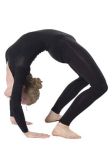
Is Hatha Yoga strictly a physical practice? No - Hatha Yoga covers mental, spiritual, and emotional aspects, as well as the physical aspects of life. The public has been duped by pretzel asanas (postures) on the covers of magazines.

If you never studied Yoga, you might not know better, but I am surprised when a student, with ten or more years of practice, still sees asana as the “Holy Grail” of Hatha Yoga. Asana is very valuable, but does not govern Hatha Yoga.

Pranayama (cultivation of life force through breath) is the ruler of body, mind, spirit, and emotions. Pranayama keeps you healthy in all aspects of existence, and Pranayama governs many asana techniques. If you cannot breathe correctly, asana performance can be very frustrating - when folding, balancing, or twisting. Pranayama makes mudra (gestures), and bandha (locks), purification of the nadis (energy channels), and meditation, much more powerful.

However, Pranayama is not the only aspect of Hatha Yoga. It is just one of the many aspects mentioned within the Hatha Yoga Pradipika. Maharishi Patanjali mentions eight limbs within the Yoga Sutras. Asana is just one of the eight limbs of Yoga, but asana can be seen, and can be performed, to impress the public.

Would the public be impressed by Samadhi (the settled mind)? You already know the answer – The general public is impressed by the superficial aspects of Yoga, but Yoga is much more than one aspect.

If Hatha Yoga were simply an exercise class, the value of a “coach” is still worthy of note. The definition of a "teacher" in most languages is, "One who has been there before."

When you can teach a Yoga student how to perform an asana technique correctly, but you cannot perform the same asana perfectly, that is a part of being a teacher. The fact is - you understand the mechanics as good as anyone.

© Copyright 2007 – Paul Jerard / Aura Publications


--------------------------------------------
How to Become a Certified Hatha Yoga Instructor
--------------------------------------------
FREE Yoga Report. FREE Yoga Newsletter.
Bonus: Free Yoga e-Book, "Yoga in Practice."
http://www.yoga-teacher-training.org/docs/Yoga-in-Practice-eBook.pdf
Visit: http://www.yoga-teacher-training.org/
Affiliates: http://www.yoga-teacher-training.org/signup.html
On-Site Training: http://www.riyoga.com/
--------------------------------------------
FREE CONTENT: If you are a Yoga Teacher, Yoga studio, blogger, e-zine, or website publisher, and are in need of quality content, please feel free to use my blog entries (articles) – Please be sure to reprint each article, as is, including the resource box above. Namaste, Paul
--------------------------------------------

Sunday, February 25, 2007

Yoga in the News Today

Via yoga and discounts, local governments promote employee health
Columbus Ledger-Enquirer - Columbus, GA, USA
From yoga classes to discounts on fitness club memberships to cash for participating in exercise program, several governments around Atlanta are trying to...

Stressed students calm down with yoga classes
Miami Herald - FL, USA
It could have been a scene from any neighborhood gym, but these yoga students were in the third grade. The studio was a classroom at Davie Elementary School ...

02:15 pm - Yoga Sun Salutation (One-day Workshop)
Stretch and strengthen over 300 different muscles, increase stamina and agility and ignite your ”inner sun”. All levels welcome. Registration only.

Stressed students calm down with yoga classes (Third Grade)
By Miami Herald
It could have been a scene from any neighborhood gym, but these yoga students were in the third grade. The studio was a classroom at Davie Elementary School. Yoga isn't just for stressed-out grown-ups anymore. Schools in South Florida ...

Apprenticeship Intensives or Private Intensives for any aspect of Yoga are available. Learn about Chair Yoga, Restorative Yoga, Vinyasa Yoga or how to set up, market, and run a successful Yoga business.
Make arrangements for your own private or semi-private Summer 2007 Yoga teacher intensive.

Thursday, February 22, 2007

Yoga Teacher Training: The Spiritual Aspect of Yoga

By Paul Jerard, E-RYT 500

How much of the spiritual aspect of Yoga should be incorporated into Yoga teacher training? Swami Vishnu Devananda, founder of the International Sivananda Yoga Vedanta Centers, believed that spiritual and physical aspects were the two most important, in relation to Hatha Yoga.

Yet, most Hatha Yoga teacher training courses offer only a small “taste” of the Vedas, Upanishads, or Yoga Sutras. In a 200-hour Yoga teacher training course, “The Hatha Yoga Pradipika,” by Swami Svatmarama, (which was written in the 15th century), might be skimmed over or not mentioned at all.

Since its beginning, approximately 5,000 years ago, Yoga has been attached to Hinduism. (Hinduism is the oldest of today’s major religions.) The many forms of Yoga were created for mental, physical, spiritual, and emotional health.

Today, Yoga has many more branches, and many of the branches of Hatha Yoga, outside India, are no longer attached to Hinduism, but the spiritual aspect of Yoga is still readily apparent. Most serious Yoga practitioners are spiritually aware, and spiritually healthy, as a result of their own Yoga practice.

Even though, Yogic philosophy does not conflict with any religion; moral codes such as Yama and Niyama exist within most religions of the past and present. When moral codes are similar to other philosophies and religions, they do not conflict with any of them.

Spiritual awareness is developed through a variety of avenues, but even an atheist would become more spiritual, if he or she practiced Yoga regularly. Samadhi – the eighth limb of Hatha Yoga is absorption with the “Supreme Being,” God, Universal energy, or the Supreme entity.

If everyone in the world practiced Yoga and meditation, we would have a much better chance at mutual tolerance of each other and world peace. It is futile to try to force others to live or worship by a narrow view of what we consider to be right. Yoga does not endorse violence, and teaches us to accept what we cannot change.

Therefore, spiritual health is enhanced with a universal moral code and faith in a higher power. There is no need for any of us to have a conflict, when we are just trying to raise children, earn a living, and worship God.

The hardest task any of us have in life is to make friends with a perceived enemy, yet each religion tells us to forgive our enemies. Look into the scriptures of your own religion and you will see.

Now that mankind has the power to destroy himself, it is very important for us to open a rational dialog with those who we perceive to be our enemies. We may just find out that we have more in common than we ever thought possible.

© Copyright 2007 – Paul Jerard / Aura Publications

--------------------------------------------
How to Become a Certified Hatha Yoga Instructor
--------------------------------------------
FREE Yoga Report. FREE Yoga Newsletter.
Bonus: Free Yoga e-Book, "Yoga in Practice."
http://www.yoga-teacher-training.org/docs/Yoga-in-Practice-eBook.pdf
Visit: http://www.yoga-teacher-training.org
Affiliates: http://www.yoga-teacher-training.org/signup.html
On-Site Training:

Yoga Approach to Meditation

By Michael Russell

Regular practice of Yoga meditation will most certainly result in a gradually widening awareness of both our inner and external lives. Meditation will effectively expand your personal aspirations, as well as helping you arrive at a clearer vision and understanding of the world around you.

But most importantly, meditation provides the most appropriate environment for you to personally experience the reality of your soul and spiritual being. This help to satisfy the profound need of us all to feel secure in our place in the grand scheme of the Universe.
There are many approaches one can take to Meditation and this is only one of the many approaches used by students of Yoga.

Firstly some preparation is helpful:

The body is prepared by a period of gentle exercise and stretching together with appropriate breath control. This allows the mind and body muscles to come together, or to integrate prior to stretching the consciousness.

The body should be comfortable and seated upright either in one of the cross-legged positions or in the so-called (in Yoga) 'Egyptian' pose, where you are seated in a straight-backed dining type chair, with spine straight and erect and hands resting on thighs. It is preferable that the chair seat be of such a height that you thighs are parallel with the ground.
Eyes are closed from the commencement.

Easy rhythmic breathing relaxes the nervous system. To focus upon this for some minutes in itself is extremely helpful, employing the restless mind and tiring it, in preparation for mental relaxation. Rhythm breathing should be followed by a number of rounds of the Yogic pranayama exercise Nadis shodana or Alternating Breath.

Now focus upon one part of the body, such as the Ajna chakra (the point between the eyebrows), which helps to anchor the mind further. An alternative is to concentrate upon a part of the body, such as the hands, and to feel your energy radiate from them.

Proceed from concentration upon the body to focusing the mind upon a single thought that you select for your Yoga meditation. If you seek to feel peaceful, concentrate upon an appropriate image or word, or both, in order to encourage a state of calm. For example, visualizing a soft blue colour, or a tranquil lake and inwardly repeating the word 'peace' or 'calm' or 'shanti' in the language with which you feel most comfortable-this helps you to 'tune in' to the quality you seek.

After a few minutes, the mind usually tires of this.

Now is the time to relax and make no mental effort at all, but just to sit and wait for your full awareness to unfold. Perhaps you will feel inclined to continue the thought of the blue colour, or you will mentally continue silently repeating the word or mantra you have chosen but this diminishes as you enter the meditative state, which is purely receptive.

Meditation brings you the experience of peace for a period of time and a state of being which you tend to hope will last and last. This is the reward for your personal aspiration to alter and improve your state of consciousness. This is the experience of the meditative state in which you let go your conscious thinking, effort and struggles, to enjoy a time of pure being.

What each of us discovers in this sacred time of being is personal and unique to us and our particular relationship or feeling of connection to the Universe around us. However, we usually share many common stages along the way as we make progress in increasing our ability to surrender our attention and sense of the material world and to enter the spheres of deeper feeling where our own intuition guides us further.

Michael Russell Your Independent guide to Yoga

--------------------------------------------
How to Become a Certified Hatha Yoga Instructor
--------------------------------------------
FREE Yoga Report. FREE Yoga Newsletter.
Bonus: Free Yoga e-Book, "Yoga in Practice."
http://www.yoga-teacher-training.org/docs/Yoga-in-Practice-eBook.pdf
Visit: http://www.yoga-teacher-training.org
Affiliates: http://www.yoga-teacher-training.org/signup.html
On-Site Training: http://www.riyoga.com
--------------------------------------------

Learn The History Of Yoga


By Michael Hawkins


Who the first yogi really was is lost in the sands of time, but when we learn the history of Yoga the roots can be traced as long as 5000 years back. The earliest reference to Yoga was found when archeological excavations where made in the Indus valley - the most powerful and influential civilization in the early antique period. This sophisticated culture developed around the Indus river and the long gone Sarasvati river in northern India, on the border towards Pakistan.


Archeological findings from two of the largest cities, Mohenjo-Daro and Harappa, revealed (among other things) a portrait of a human being or god meditating in what looks like a Yoga posture. The Rig-Veda work, that describes different Yoga methods, is believed to be derived from the Inus-Sarasvati people and has been dated to 3000 to 5000 B.C.


Yoga as we know it today, is thus the result of a complex evolution that has been going on for at least 5000 years. However, according to most scholars, Yoga can't be recognized as a complete and complex tradition before about 500 B.C.


Vedic Yoga


The oldest written records of Indian culture and yogic activities is found in the Vedas, which are a compilation of hymns and rituals over 3000 years old. The Vedic Yoga, also known as Archaic Yoga, revolves around the thought of reuniting the visible material world with the invisible spiritual world by sacrificing certain things. In order to practise these rather long rituals successfully it was necessary to be able to focus the mind to a very hight level. This inner focus as a means to enhance the sensory and human ability is the root of all Yoga.


The Vedic teachings at this point where not reserved for an religious elite, but was instead transmitted to the people by Vedic prophets, called Rishis, who had gained insight in the origin of life and it's existence. The hymns of these prophets witness of strong intuition, wisdom and knowledge about human beings that can inspire new levels of understanding even for the people of today.


Pre-classical Yoga


This period in Yoga history spans about 2000 years, until year 200. The most central Yoga literature from this period are the Upanishades - a collection of texts revolving around meta-physical speculation - and are just like the Vedas considered as enigmatic revelations. As opposed to the public rituals of the Vedic period, the Upanishades where secret scriptures.
Some of these 200 Gnostic texts are directly related to Yoga and are about the complete connectedness of all things. Yoga was now slowly finding it's form. As Yoga and it's secret teachings spread from teacher to student, or from guru to yogi, the concept of an individual system of thought began to take shape.


The Bhagavad Gita, that is the most well known and popular work among all Hindi and Yogic literature was written during this period (about 500 B.C.). It is a beautiful story of a conversation between the god of Hinduism, Krishna, and a prince named Arjuna. The plot, ironically enough, takes place on a battlefield. This location is often interpreted as a metaphor for the many distractions present in our turbulent world. Prince Arjuna had put himself in a difficult position, where he must fight parts of his family and friends.


Symbolically speaking, this frustration conveys that prince Arjuna wanted some advice on how to fight the bonds that tie him to the material world, in order to set himself and his soul free. Krishna explained that it was Arjuna's destiny and task to face this situation. He then moved on to explaining to Arjuna how he could emerge from the battle victorious, by outlining a detailed yogic path for the prince to follow; Through devotion (bhakti Yoga), a keen mind (jnana Yoga) and by giving up the ego (karma Yoga), spiritual freedom (moksha) could be attained.


Needless to say, the Bhagavad Gita is a complex work, and is meant to be studied, pondered upon and then studied some more. It is interesting reading in order to learn the history of Yoga though.


Learn more about Yoga history on Michael Hawkins' web site. If you want to learn more about Yoga "in plain English" and from a beginners perspective, you can check out his No Nonsense guide to Yoga.


--------------------------------------------


--------------------------------------------

FREE Yoga Report. FREE Yoga Newsletter.

Bonus: Free Yoga e-Book, "Yoga in Practice."


On-Site Training: http://www.riyoga.com

--------------------------------------------

Tuesday, February 13, 2007

Yoga Teacher Training: The Value of the Sage


By Paul Jerard, E-RYT 500

We live in a time when the masses have to be impressed by the extremes. When people think of Yoga, they often think of circus tricks, pretzel bodies, and gymnastic feats. Feats of physical prowess are a wonderful thing, but you do not need a Yoga teacher’s instruction, or a sage’s advice, to perform them.

When I was visiting a colleague’s Yoga studio, a young woman signed up for a free introductory Yoga class, and a free Tai Chi class. Before the Yoga class started, she was walking on her hands, touching her heels to the back of her head, and doing full splits in every possible direction. She also put on the same performance before her Tai Chi class.

Needless to say, she did not sign up for either class. About Yoga: She claimed that one Yoga class was all she needed. She had “been there and done that.” She was bored by Yogic philosophy, Pranayama, and meditation. She had “mastered” everything about Yoga in one beginner class.

My Grandfather used to say, “You can’t reason with a horse’s tail.” So, there was no point in reasoning with someone, who already has all of the answers to life’s many mysteries. In my life, my Grandfather was to be the first of many sage’s for me to learn from. He did not know much about Yoga, but he knew a great deal about common sense, philosophy, and how to apply them to every day life.

The value of a sage cannot be under estimated. Unfortunately, the news shows us that wisdom and common sense have been taking a “vacation” for awhile. In Yoga, a sage does not need a light show, fireworks, smoke, explosions, or special effects to capture the imagination of his or her Yoga students.

In Yoga, we look to the sages of the past, and present, through the written or spoken word. The sage is a Yoga teacher who can capture your imagination and guide students without any special effects. Maharishi Patanjali might be the first sage that comes to your mind - when thinking about the Yoga sages of the past.

So, where do you find a sage? Please remember that a sage is usually a mentor of spiritual and philosophical subjects, who is a source of profound and innovative wisdom.

This does not mean he or she has to be a Yoga teacher, but this is someone you can constantly learn from. If you need a notebook to keep up with all of the wisdom you hear from your mentor, then you have found a genuine sage.

The true sage has been where we desire to go and is capable of teaching all of us.

© Copyright 2007 – Paul Jerard / Aura Publications


--------------------------------------------
How to Become a Certified Hatha Yoga Teacher
--------------------------------------------
FREE Yoga Report. FREE Yoga Newsletter.
Bonus: Free Yoga e-Book, "Yoga in Practice."
http://www.yoga-teacher-training.org/docs/Yoga-in-Practice-eBook.pdf
Visit: http://www.yoga-teacher-training.org/
Affiliates: http://www.yoga-teacher-training.org/signup.html
Sister Blog: http://www.yoga-teacher-training.org/blog
On-Site Training: http://www.riyoga.com/
--------------------------------------------
FREE CONTENT: If you are a Yoga Teacher, Yoga studio, blogger, e-zine, or website publisher, and are in need of quality content, please feel free to use my blog entries (articles) – Please be sure to reprint each article, as is, including the resource box above. Namaste, Paul
--------------------------------------------

Tuesday, February 06, 2007


The Purpose Of Yoga

By Donovan Baldwin


Yoga, or its ancestor, first appeared somewhere around 5,000 years ago. Since then, it has gradually evolved into the modern form. However, its "modern form" is neither completely modern, nor is it the only form of yoga.

In the western world, when we speak of "yoga" we are commonly referring to Hatha Yoga, a branch of yoga introduced by Yogi Swatmarama in the 15th century. To keep it simple, Yogi Swatmarama saw Hatha Yoga, not as an end in itself, but as part of a pathway to a higher state on the yoga journey.

Hatha Yoga concentrates more on the physical training, conditioning, and "preparation" aspects of yoga. So, as we talk about the purposes of "yoga", please keep in mind that we are talking only about one portion of the entire range of disciplines encompassed by the word.

We sometimes hear of someone who learned to become more relaxed by the practice of yoga. Or, maybe we have heard of someone who became more invigorated and energetic as a result of their practice.

Perhaps someone else was able to play a competitive sport better than before they began practicing yoga, or perhaps they were able to lay aside the competitive aspect of their nature that had been driving them into bad health and broken relationships. We may have even heard all of these types of stories. I have!

This, and all the claims made about the practice of yoga, creates a very confusing picture even in the minds of those willing to believe what they hear. For those who have doubts already, the multitude of claims can sound like those of an old-timey snake oil salesman.

Actually, research conducted by many prestigious organizations and institutions has confirmed that a regular practice of yoga can actually produce all of these effects and more. While some uncertainty exists in some areas as to exactly WHY yoga is so effective in relation to a given situation, condition, or result, the common ground seems to be that it works.

While yoga can return the same physical, emotional, and spiritual benefits as any other physical training or exercise program, it also produces a blend of positive results that allow the individual organism to integrate the effects and actions of several different systems to produce a whole overall outcome which seems to be greater than the sum of its parts.

For example, the increased ability to relax may help the ability to perform, the strengthening of the physical body helps the emotional output to be brought under control. All specific benefits of yoga, when practiced regularly, work together for the overall benefit of the person.

It appears that this synergistic outcome combines the more specific benefits associated with any regular exercise program, with meditation, with deep breathing, with the "exercise" or "massage" of internal organs normally ignored by standard physical activities to produce the confusing array of "positive" outcomes mentioned at the beginning of this article.

Whatever the other positive outcomes of a regular yoga practice may be, its effect on physical and mental health in general should not be ignored. Yoga has been found to have a positive effect on such conditions as asthma, respiratory difficulties, high blood pressure, pain management, back pain, arthritis, and weight loss. Psychologically, it tends to increase self awareness, create a positive self-image, and uplift the spirits of the participant.

Many who come to yoga for the first time find themselves with a "new lease on life" as one practitioner put it to me and find themselves trying new experiences, finding new friends, and taking control of a life which had, up until then, been in control of them.

Apparently, yoga has the potential of being effective in many aspects of life and health, and can, in most cases at least, mold itself to your needs. It might be said that the purpose of yoga is to serve in whatever capacity it is needed.

Donovan Baldwin is a Texas writer and a University of West Florida alumnus. He is a member of Mensa and is retired from the U. S. Army after 21 years of service. In his career, he has held many managerial and supervisory positions. However, his main pleasures have long been writing, nature, and fitness. In the last few years, he has been able to combine these pleasures by writing poetry and articles on subjects such as health, fitness, yoga, writing, the environment, happiness, self improvement, and weight loss. Learn more about yoga at http://yoga-4-the-health-of-it.com/ You can also find articles on yoga and other health related subjects at http://nodiet4me.blogspot.com/ .

--------------------------------------------
Attleboro Yoga & Pilates Classes - February Schedule
--------------------------------------------

Dear Yoga & Pilates Enthusiasts,

Below is our February 2007 - Yoga / Pilates Class Schedule:

Monday: 6 PM – 7 PM Beginner / Gentle Yoga
Tuesday: 6 PM – 7:15 PM Vinyasa Yoga
Wednesday: 6 PM – 7 PM Pilates/ Body Sculpt
Thursday: 6 PM – 7:15 PM Beginner / Gentle Yoga
Saturday: 11:30 AM – 12:30 PM Yoga / Pilates Body Sculpting

Aura Wellness Center
21 Park St.
Suite 202, 2nd Floor
Attleboro, MA 02703
Phone: 508-222-0092
--------------------------------------------
Attleboro, MA On-site Yoga Training: http://www.riyoga.com
--------------------------------------------
--------------------------------------------
How to Become a Certified Hatha Yoga Instructor
--------------------------------------------
FREE Yoga Report. FREE Yoga Newsletter.
Bonus: Free Yoga e-Book, "Yoga in Practice."
http://www.yoga-teacher-training.org/docs/Yoga-in-Practice-eBook.pdf
Visit: http://www.yoga-teacher-training.org
Affiliates: http://www.yoga-teacher-training.org/signup.html
On-Site Training: http://www.riyoga.com/


Yoga Fundamentals: The Seven Chakras

By Shumam Fasi

In Sanskrit the word chakra means spinning wheel representing the seven spinal energy centers. The charkas correspond to your spiritual growth, behavioral characteristics and to specific areas of your body. All the charkas can be aligned together and made to spin in the same direction and speed through the art of yoga. You can bring a certain type of balance and peace to your mind, body and spirit by understanding how to fine tune and control your charkas through yoga and meditation.

Each and every part of your body from the perineum to the crown of your head is associated with the seven chakras along the spine. These chakras are connected with a particular color, body location, a central emotional or behavioral issue and with other personal aspects rights, identity, goal and other such issues.

Below you will find how these seven chakras can be categorized:

Sahasrara - cerebral cortex or top of the head.
Ajna - eye brows.
Visshudha - throat.
Anahata - heart area.
Manipura - solar plexus.
Svadhistana - lower back or hip, abdomen and genitals.
Muladhara - base of the spine.

Through the ancient art of yoga you can concentrate your energy to and from the various chakras of your body and this can help you can compensate for areas that may be out of synch with the rest of your body or are inactive.

Proper distribution of this energy called Kundalini energy, along with all seven of the chakras can help you achieve a certain level of balance and harmony.

As a coiled up snake it rests in your Muladhara chakra, in its dormant state. Energy that flows through your system is regulated by these chakras. So if you are able to realign them through controlled and purposeful movements such as yoga, you can achieve a certain level of emotional wellbeing and physical benefits.

Shumam Fasi is involved with an online yoga project that informs and educates the yoga enthusiast through well-written articles. Discover the timeless wisdom of Yoga meditation, breathing, & positions, as well as reviews on Yoga videos, mats, accessories, & much more... http://www.yoga-advice.org

--------------------------------------------
How to Become a Certified Hatha Yoga Teacher
--------------------------------------------
FREE Yoga Report. FREE Yoga Newsletter.Bonus: Free Yoga e-Book, "Yoga in Practice."http://www.yoga-teacher-training.org/docs/Yoga-in-Practice-eBook.pdf
Visit: http://www.yoga-teacher-training.org
Affiliates: http://www.yoga-teacher-training.org/signup.html
On-Site Training: http://www.riyoga.com
--------------------------------------------