Translate

Tuesday, May 30, 2006

Yoga Teacher Training: Pregnant Students

yoga training
Yoga and Pregnancy

By Mike Herman

If you’re pregnant and are already in yoga classes, don’t be afraid to take a break from your current classes or to take a class that is less strenuous. Even if you haven’t gone public with your pregnancy yet, you should have a confidential talk with your instructor let him or her know of your pregnancy, the instructor will then be able to assist you with less strenuous postures or teach you poses that you aren’t doing that will help you.

If you are new to yoga and are looking for a low impact way of exercising the best thing to do is to look for a prenatal yoga class. These classes are designed for pregnant parishioners and you can start them as early in your pregnancy as you want. If you are having morning sickness, you may want to wait until that passes and that usually is the second trimester.

If you have been practicing yoga for a while, you still may find your regular classes seem to be too intense for you. Prenatal yoga training classes may seem too easy, so at this point you will need to decide which class you should take on a given day depending on how you feel.

The solution might also be to include some prenatal poses that have been adapted into your regular routine. If you are in a class, your yoga instructor may help you with special poses developed for pregnancy and your changing body. When you enter the second or third trimester, you may find that prenatal classes are more suited for your body and its changing shape.

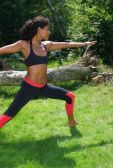
If you practice with videotape, you should buy a prenatal video. Some of the recommended first trimester poses are ones that open the hips such as Pigeon, Triangle, Warrior II, and Knee to Ankle.

Second Trimester?

Are you an enthusiast and want to continue to do your Yogic exercise practice while pregnant? Yogic exercise can continue to be practiced during your second trimester with just a few precautions. By the second trimester, your morning sickness should be over and should be feeling better.

If you haven't yet started yoga training yet and wish too - you are in luck, "now is the perfect time to start".  Always contact your health care provider before starting any new exercise program. This is a good rule of thumb even if you aren’t pregnant.

Start with finding a class with an excellent and experienced instructor. Many women enter yoga for the first time during their pregnancy so don't worry that you will be the only new pregnant woman in class. Talk with your friends and get references for a prenatal Yoga instructor.

If you are already practicing yoga, there is no need to give up your classes if you feel strong enough to do them. You can incorporate your own adaptations to the poses when fitting. As your belly grows, the more adaptations you will need to make.

You will want to take any inversion pose to the wall if it poses a risk of falling. If you aren’t comfortable doing these poses, then it’s all right to give your body permission to skip them. One that you can practice safely is the Legs Up the Wall Pose.

If you practice at home, you still might consider going to a prenatal class at least once or twice a week. You will be able to connect with other pregnant women there and know you are not alone in what you are going through.

Some Yoga Poses you will want to avoid during your second trimester or at least adapt them to your growing belly. Deep twists from the belly compress all of your internal organs, including the uterus. You can continue to do the twists, just do them gently from the shoulders instead of the belly.

Of course avoid any jumping or poses that require back bends. Abdominal strengtheners should be avoided, as they need to be softened in preparation for birth. Of course, lying on the belly should not be practiced once you begin to show. It will probably be too uncomfortable for you anyway.

Practice the Birthing Breath, deep inhalations in through the nose and exhaling slowly through the mouth.

Third Trimester?

In the third trimester of your pregnancy, everything becomes more difficult to do. Tying your shoes, climbing upstairs and even turning over in bed can become a chore. Yoga will become more difficult and you should use more caution but there isn’t any reason you can’t continue to practice yoga up to your due date.

For those that were working and are now on maternity leave, you might just now be finding time to do prenatal yoga. You will still benefit from doing gentle yoga stretches and poses. If you are attending a class, be sure your Yoga teacher knows when you are due. Remember, now is the time to take it easy. It isn’t the time to be an overachiever. Always check with your doctor before starting any exercise program or if you have questions about which prenatal yoga is best for you.

If you are listening to your body, it will tell you what you can and can't do. Continue to stay in touch with your body, allow your body to take it easy. It’s a good idea to continue practice breathing, as this will help you during the birth process.

Some poses that are recommended for the third trimester are hip openers such as Pigeon, Warrior II, Triangle, and Knee to Ankle. All four Cat-Cow positions will also help by preparing the baby for birth. They will help the baby get in proper position, head down and it’s back turned toward your belly.

Of course, the same poses you adapted during your second trimester must be practiced with extra caution. No jumping, or twisting from the belly, deep back bends or anything that involves strengthening the abdomen. Goes without saying, there shouldn’t be any poses that need you to lie on your belly.

One of the more important aspects to remember when you are practicing Yoga during pregnancy is to control your breathing and listen to your body. Practicing yoga and listening to your body will help prepare mentally for the birth process. As you learn to be in the moment and quiet your inner body, Yoga will help with that as well as your breathing exercises.

Pregnancy doesn’t have to be an obstacle in your practice of Yoga. In fact, it can be a vital part of your prenatal routine. With poses that are designed for pregnancy and incorporating routines that will help you to have an easier birth. Some routines you will find you are unable to do. If you are unsure of the poses, listen to your body. It will tell you which ones that are too much for you in time in your pregnancy.

So, don’t be afraid to continue your Yoga practice. It may mean that you will have an easier delivery and a faster recovery after birth. It also should make getting into shape after birth easier as well.

Saturday, May 27, 2006

Yoga Teacher Training: The Right Time and Place

yoga training
Yoga and Self Analysis: The Right Time and Place

By Paul Jerard

As many of you know, Yoga is something you can practice any time. You can be mindful of others, show loving kindness, forgive, give to charity, keep good posture, eat right, and practice Yogic breathing techniques during your day, without much problem.

Those who practice physical forms of Yoga training will have to set aside time during the day for Asanas. Meditation is practiced without any distractions, therefore, you will have to budget your time. It may be more convenient to practice meditation after your Asanas are finished. So far, everything seems easy enough for the average Yoga practitioner to fit into his or her lifestyle.

Alternately, self analysis is a part of Yoga teacher training that many practitioners do not have time for. You cannot practice self analysis when you are “in the heat of battle.” This preoccupation will cause self doubt if you are in a pressurized situation. You must react to life as it is right now, and be in the moment to find solutions.

This seems to be a paradox: We think of self analysis and Yogic methodology as empowering practices. We do not associate self analysis with temporary mental paralysis.

However, in order for you to make significant discoveries about yourself, and consider how to apply your skills to life, there is a certain amount of time needed to envision the fruits of your labor. You will then have to put your visions, plans, and goals into action.

So, how, and when, do you make the time for a self analysis session? Much like Yogic meditation, you need a quiet time and place. Try to allow one hour per week; and if you come up with a blank, at a certain point, finish your session with meditation. You can meditate on a related point, or practice, any familiar Yogic form of meditation.

Self analysis sessions require a pen and paper. Although some of you may opt for a PDA, or a laptop, some will still prefer the experience of putting an idea down on paper. This will also give you something to reflect on during the week and in the following sessions.

Just like Yoga teacher training, self analysis can be practiced with others, with a coach, or with a master teacher. The big difference is the direction your session will go in.

Anyone you choose to share thoughts with must be trustworthy or there will be no benefit. Therefore, much like your meditation sessions this is very much a rewarding form of self discovery. If you have any difficulty, this skill can be improved by practicing with a competent Yoga teacher.

© Copyright 2006 – Paul Jerard / Aura Publications

Wednesday, May 24, 2006

Yoga Training

yoga training

Yoga Equipment
By David Wells


Yoga is quickly becoming very popular, and for good reason. Yoga will make almost anyone feel better and in shape. For most, yoga is the ideal exercise to keep your body in shape while helping you relax and unwind at the same time.

Research has demonstrated that yoga can help control anxiety, reduce asthma, alleviate arthritis symptoms, lower blood pressure, eliminate back pain, and benefit patients suffering from multiple sclerosis, chronic fatigue, epilepsy, diabetes, headaches, stress and much more.

Yogic exercise offers a lot of benefits. Perhaps its most important benefit is it's ability to reduce tension and stress. Stress can lead to a whole slew of other health problems.

Yoga training increases muscle tone, strength, stamina and flexibility. If you are overweight, yogic exercise can help you gently reduce your weight and keep the pounds an inches off. Yogic exercise can burn excess fat and give you your desired figure.

Yoga can also help you improve your concentration and enhance your creativity. It can help you to think more positively and learn to live free of anxiety.

Your body needs to relax from time to time. Sometimes, work can leave us feeling spent and exhausted. During busy days, we may not be able to unwind because work is still on our mind. Yogic exercise can help you create a sense of calmness and well being to replace this stress from work.

Yoga training exercise improves circulation. Your organs and veins need to move and stretch to function properly. Yogic fitness can also help stimulate your immune system to protect you from disease.

Don't confuse it with religion. It's just a method of exercise with a long list of benefits to your health and well being. If you begin to feel more spiritual it's probably because you are more in tune with your body and life than you were before you started training.

The pressure and demands of life can leave us stressed out. We find ourselves rushing most of the time with the deadlines and hassles we need to keep up with. This leaves us little time to rest our minds and relax.

These are just a few of the many powerful benefits yoga training has to offer. Find a little time to dedicate to it every day and you will begin to feel more calm, certain and relaxed than you thought possible.

Make the most of your exercise witht he right yoga training equipment.

Tuesday, May 23, 2006

Yoga Teacher Retention Tips


yoga teacher
By Dr. Paul Jerard, E-RYT 500

How can Yoga teachers make new students realize the value of long-term training? Is it just luck, or where you are located, that draws appreciative students? Is there a method for teaching Yoga to new students, without scaring them off? Let’s look at many solutions to keep the interest of your established students and those new Yoga students, who just walked in the door.


When a new student arrives to learn Yoga, he, or she, may not have any previous Yoga experience. When teaching Yoga to new students, it is wise to see it from their viewpoint. Everything is new, including your staff, your system, and your method of teaching. It is up to the teacher to make of all these components “user friendly.”

Here are some tips for you, your staff, and the way your facility is run. Remember that these guidelines also apply to your existing Yoga students too. Never take them for granted and your students will stay with you “through thick and thin.” Always show appreciation to your existing Yoga students.

Always give Yoga students your complete attention and make sure your teaching method for Yoga is the best it can be. If you are feeling ill, or are in pain, you may have to let a substitute Yoga teacher, teach your Yoga class, in your place. All of us want to teach our own Yoga classes, but the quality of your teaching should always be the best it can possibly be.

Do not get caught up in “penny pinching.” Some teachers become adversarial about fees for every little thing. If you teach Yoga for a living, charge a fee that you can live with. Do not “short change” yourself, but avoid the perception of a “money hungry” salesperson. Do not hire pushy sales people either. Your Yoga teaching service depends on a professional image that is seamless, compassionate, truthful, and a pleasure to work with.

Make sure you can deliver on all of your promises. Never talk about Yoga as a cure. This implies that we cure our students of ailments. Yoga definitely does help with many ailments, but when you make guarantees, you leave yourself open for “legal grief.” A promise is a guarantee, and can potentially put you out of the Yoga business permanently.

When you teach Yoga, stick to the facts, and know the exact sources of research, before making a statement. Most Yoga teachers do not have a medical degree, so avoid medical opinions, unless you are a medical doctor. A wise Yoga teacher would tell his, or her, Yoga students to seek medical advice from a physician. Yoga students should also look into the value of a second opinion from a qualified medical professional.

Make sure your staff, and the person who answers the phone, are very friendly. If this is not the case, find replacements. A rude receptionist will scare off existing, and new, Yoga students. Your receptionist is the “keeper of the gateway” to learning Yoga from you, and gives the first impression of what you are all about. You will never get a second chance to make a first impression.

Lastly, always return phone calls. At our wellness center, we constantly get calls from new, and eager, Yoga students who called another school first.

However, the first call was not answered, and then, we get the second call. I cannot complain about this, it works to the advantage of my staff, but not answering phone calls, at any Yoga studio, gives all Yoga teachers a bad image.

If you follow these basic guidelines, you will keep more of your existing Yoga students. New Yoga students will want to repeat a good experience, so you do not have to preach them about the value of long-term Yoga practice. They will eventually see it for themselves and will come to appreciate your teaching method.

Always remember: Becoming a successful teacher is not luck, it is a formula that you must practice every day.

© Copyright 2006 – Aura Wellness Center – Publications Division

Monday, May 22, 2006

Yoga Philosophy for Beginners

yoga training
Yoga Philosophy for Beginners

By Paul Jerard


Are you searching for much more from your Yoga class than just a workout? What deeper concepts should you learn in your Yoga practice? How can philosophy, taught by a Yoga teacher, change the quality of your life today?

There are so many Yoga philosophy concepts, but here are three that will help you shed many burdens in life. Yoga teachers vary on how much Yogic philosophy they will teach within a typical class. The cause of this may be the type of Yoga class, the perceived popularity, or the Yoga teacher’s choice.

In my Restorative Yoga classes, I teach much more Yogic philosophy than I do in a Vinyasa Yoga class. The same can be said for the amount of meditation time within my North Providence Restorative Yoga classes.

If you are wondering why - here is the answer: My Vinyasa Yoga students are usually younger and could really care less about Yogic philosophy or any other philosophy. They just want to work hard, so we work on mind and body only.

Am I selling out? You can be the judge, but these Yoga students will change with time, and will eventually want to see more of what Yoga has to offer. They are not in a big rush to learn any other form of Yoga, beyond the physically challenging styles - which is fine, because I need to get my exercise, too.

The following are three basic Yogic philosophy principles that will change your life, for the best, today. Try them, and you will make your life happy, simple, and less stressful. Make the change today, or tomorrow morning, for your overall health.

Loving kindness toward yourself, and others, starts from the moment you wake up. Stop criticizing yourself and others. Take positive action and you will see big changes. This is very hard to do, but try not to make negative comments about those who do not live up to your standards. If you can help by being a good example, that’s fine, but do not make it an issue, or a point of contention.

Never beat yourself up with criticism. If you have done wrong, make an effort to change and find solutions, but do not dwell on past mistakes. It will not be to your benefit to meditate on guilt.

Forgiveness is important for your survival and the quality of your own life. You have to let go and forgive others, for your own good. A grudge is a “prison sentence.” Let it go and you become free to do more important things. If you do not let it go, your overall health will suffer, as a result.

Being content with what you have is also known as Santosha. This will stop you from driving yourself crazy - when you are constantly competing with everyone around you. If a friend just bought a new house, feel good for him or her. Do not worry about what you do not have. Be happy about what you do have.

This applies to the physical aspect of Yoga, as well. If you see another student easily perform difficult asanas, be happy for him or her, but be proud of your own accomplishments. For example: You may have improved balance, learned a Pranayama technique to reduce stress, be eating a better diet, or feel the many benefits of meditation.

Make these three Yogic concepts a part of your daily life, and you will enjoy life’s many treasures.

© Copyright 2006 – Paul Jerard / Aura Publications

--------------------------------------------
Visit: Yoga teacher training
--------------------------------------------
If you are a Yoga teacher, studio manager, blogger, e-zine, or website publisher, and are in need of quality content, feel free to use my blog entries (articles) – Please be sure to reprint each article, as is, including the resource box above. Thank you and Namaste, Paul
--------------------------------------------

Friday, May 12, 2006

The Perseverance of Teaching Yoga

yoga instructor
The Perseverance of Teaching Yoga

By Paul Jerard


Why do talented students fall short of becoming a Yoga teacher?

Ever notice that “quick flashes” of brilliance disappear in a short time. Take for example, the super flexible Yoga student who can do a split in every direction, and make a pretzel, or circle, out of his, or her, body on the first Yoga class. Usually, this student will leave after the first class saying, “Is that all there is to Yoga?”

As most of us know there is so much more to Yoga than mere flexibility, but how do you make a student aware of this in his or her first Yoga class? Do you really want to try? Some Yoga teachers jump through “flaming hoops” to appease a potential student who has natural flexibility. This happens much to the dismay of dedicated and established Yoga students who have been training for years.

So what is the problem and why do we worship exceptional flexibility and physical prowess? The problem stems from the Yoga teacher who has forgotten what the prime ingredient is within the exceptional Yoga student. That ingredient is “perseverance” and that is what separates the “flash in the pan” from the Yoga student who may well evolve into a Yoga teacher. The student who shows up to Yoga class and tries to do his, or her, best should never be taken for granted.

Perseverance is a true guarantee of success for Yoga students and Yoga teachers alike. When you think about your life, perseverance has always played a major role in your past achievements. How many people will tell you that teaching Yoga is not a good career move? Plenty will, but you must have the fortitude and perseverance to pursue your own desire, in the first place.

In order to make any achievement, you need a formula for success. Here is a list of ingredients that you must have in order to succeed at teaching Yoga or anything else in life. Firstly, you need desire and passion to become a Yoga teacher. If you don’t have it, that’s no problem, just find something that you feel passionate about. Do not waste time pursuing any goal without passion.

Secondly you must have a dream that you can visualize. If you can picture yourself teaching Yoga, and feel the joy of your journey, you are fine. However, if you cannot see yourself becoming a Yoga teacher, it just might not be your “calling.” Whatever the goals you choose to pursue in life, you will need both desire and the ability to visualize your dreams, in order to proceed to the next step.

The third ingredient is to take action. The difference between a dream and a goal is how much action is propelling the idea forward. If I visualize becoming a Yoga teacher without any action, then this is just a “pipe dream.” You would be better off to dream in your sleep and take action while you are awake.

Look around you and you will see most people do not make any significant changes or take positive action. If you want to teach Yoga, this is to your advantage. Why do I say this? So many people passionately talk and dream without action. Even after you become a Yoga teacher, you must still take action, but many people “rest on their laurels.” A few Yoga teachers skip their continuing education, become stale, and eventually quit.

How can this happen? Because Yoga teachers and everyone else should write down goals, make plans, and keep taking action. This is not that difficult, but sitting down and dreaming is easier. The biggest difference between those who think about becoming a Yoga teacher and those who become a Yoga teacher is action. Determination and perseverance do count against all the odds.

The last ingredient toward successfully teaching Yoga is to maintain your own personal practice and continue your education on Yogic subjects as they apply to your students. Learn more about safety, anatomy, kinesiology, physiology, sports medicine, modifications, props, and physical therapy. Network with medical professionals and you will learn more. Learn about Yogic philosophy for yourself and for those Yoga students who are eager to learn from you.

This is what I refer to as the “monitoring stage.” You cannot expect your ability to improve as a Yoga teacher to run on “auto-pilot.” You still have to write down and reach for goals.

Again, perseverance comes into play. For every Yoga teacher I know, perseverance has become a way of life. This is the way it must be in an ever-changing and fast paced world. Your dreams may not go according to plan bur perseverance is your private mental strength. When you teach Yoga classes, you must address the needs of your students and this causes self-improvement.

The rewards for Yoga teachers are many, but giving Yoga instruction requires determination. You will run into obstacles, like any other profession, but how do you want to be remembered? Think about this: Every person you help will help someone else. You are causing a positive chain reaction by teaching Yoga classes at a time when positive energy is in big demand.

As a Yoga teacher, you have the potential to do enormous good, but you must focus your attention on your faithful Yoga students, your family, and friends. It is normal to take people we are familiar with for granted, but you must persevere to appreciate what you already have.

© Copyright 2006 – Paul Jerard / Aura Publications

--------------------------------------------
Visit: Yoga teacher training
--------------------------------------------

If you are a Yoga Teacher, studio manager, blogger, e-zine, or website publisher, and are in need of quality content, please feel free to use my blog entries (articles) – Please be sure to reprint each article, as is, including the resource box above. Namaste, Paul
--------------------------------------------

Tuesday, May 02, 2006

Secrets of Exceptional Yoga Teachers, Part 2

yoga instructor training
Secrets of Exceptional Yoga Teachers, Part 2

By Paul Jerard

Professional and responsible Yoga teachers become exceptional Yoga teachers. The Yoga teacher who shows up late for class, is disorganized, and does not have a hint of lesson plan in his or her head, will not be successful. As a Yoga teacher, your conduct should be professional at all times. You cannot “act like a Yoga teacher” during a class and then provoke conflicts outside of your classes.

Yoga instructors need to have problem solving skills, as not all bodies are the same. Some students will require a bit more “maintenance,” than others. You are a living and breathing guide to Yoga’s many aspects. You will be asked to explain the physical, mental, and possibly the spiritual benefits of Yoga. As a result, you will become a better Yoga teacher than you imagined.

The responsibility just comes with leadership and being self-employed. An independent mind-set is ingrained through the daily routine of handling your own affairs. You are in charge of your own finances, health, career, and more.

Being willing to adapt and evolve is a key component to teaching Yoga. Now more than ever Yoga and healing information is being exchanged at the speed of the Internet. You must absorb information in regard to Yoga, physical therapy, ailments, physiology, anatomy, kinesiology, and sports medicine.

Therefore, you may want to learn how to speed read or listen to audio books. Your Yoga lesson plans will evolve, when you learn new methods for safety, modifications, and how to help Yoga students with ailments.

Planning and preparation are a part of each day, as you get ready for each Yoga class. You must also write down your daily, weekly, monthly, and annual goals. This will propel you to a level of Yoga teaching beyond your “wildest dreams.” This method is a matter of positive visualization and using positive energy for the good of those you come into contact with. You will be shocked to see your written goals become reality, but written goals do come true quite often.

Setting a pace is a matter of being reasonable with yourself and those around you. This may sound strange, but I have seen Yoga teachers push themselves too far. Life is a journey, not a race, and the rewards of pacing yourself will be plentiful, if you allow yourself the time to “stop and smell the flowers.”

Ambition is the final key, but based upon what I have already said, all aspirations should be “kept in check.” Never look at life from a linear viewpoint. Enjoy your loved ones and friends, as you work toward becoming an exceptional Yoga teacher. This will be your holistic path to success.

© Copyright 2006 – Paul Jerard / Aura Publications

--------------------------------------------
Free Report, Newsletter, and e-Book: Yoga in Practice
Visit: http://www.yoga-teacher-training.org/
--------------------------------------------
If you are a Yoga teacher, studio, blogger, e-zine, or website publisher, and are in need of quality content, feel free to use my blog entries (articles) – Please be sure to reprint each article, as is, including the resource box above. Thank you and Namaste, Paul
--------------------------------------------

Secrets of Exceptional Yoga Teachers, Part 1

yoga training
Secrets of Exceptional Yoga Teachers, Part 1

By Paul Jerard

Would you like to know a formula for becoming an exceptional Yoga teacher? What separates the exceptional Yoga teacher from the “pack?” Here is an itemized formula to become an exceptional and successful Yoga instructor.

Continuing education is part of a Yoga instructor’s job description. Although you may teach Yoga, you must accept being a student of Yoga for life. Learn what you can, to benefit your Yoga student’s ailments, and when you have time, learn a little bit more. With 5,000 years of documentation behind it, Yoga is like a great mountain where one lifetime will just not be enough to discover everything.

Patience is the next ingredient within an exceptional Yoga teacher. Be patient with yourself, your family, your friends, and your Yoga students. Do not put pressure on anyone unnecessarily. Some Yoga students have to grow into the practice. You might be unknowingly doing the same to yourself or your loved ones. The key is to become aware of it and always be mindful of others.

Take action and understand the laws of cause and effect (Karma). Most of the world takes no action at all, but exceptional Yoga teachers do not “sit on their hands.” Just by taking action, you will be a success in life. Great ideas mean nothing without action, but your actions should always help others. It is fine to help yourself, just make sure you are not harming anything in the process.

Compassion is needed to become an exceptional Yoga teacher. You must show compassion for Yoga students and for mankind. Treat everyone possible with loving kindness. When this is impossible avoid negative people who seek pleasure through spreading pessimism, bigotry, hatred, greed, and envy.

Passion for Yoga and for helping other people can be found in most Yoga teachers. The Yoga teacher who just “does it for the money,” will not last. If you feel like that, you should find your “real calling,” passion, and true desires. Life is too short to waste time doing a job that you dread. Strangely, I have never met a Yoga teacher who regretted teaching Yoga. If I ever find one, I will let you know.

Courage is required to be your own boss. To wake up each morning and go it alone, without someone over your shoulder is a Yoga teacher’s life reward. Most of the masses like to be told what to do, but the Yoga teacher makes his or her own hours. There is some responsibility that goes with any business, but every Yoga teacher knows the responsibility is worth it.

© Copyright 2006 – Paul Jerard / Aura Publications

--------------------------------------------
Free Report, Newsletter and e-Book:
Yoga in Practice
Visit: http://www.yoga-teacher-training.org/
--------------------------------------------
If you are a Yoga teacher, studio manager, blogger, e-zine, or website publisher, and are in need of quality content, feel free to use my blog entries (articles) – Please be sure to reprint each article, as is, including the resource box above. Thank you and Namaste, Paul

Sunday, April 30, 2006

Teaching Yoga for College Credit

home study yoga

By Cynthia L. Marshall, Ph.D.

Recently, in my college credit class, Yoga II, which studies Ashtanga, the students handed in their papers concerning the changes which they see in their lives which they feel are linked to their intensive study of yoga.

Here are some excerpts from my students' papers:

Yoga changes you from the inside out.

Since practicing yoga, I'm willing to try more foods and eat healthier foods.

Yoga has changed my social nature. . . I have been trying not to just lash out. I have also done a lot of different things for people without receiving credit.

(Megan, 21 years of age)

I feel this semester's poses and workouts have also changed my physical body from the inside.
I think Yoga has also taught me to be positive about my future and teaching as a new career.
I used to worry about everything. I just think now, what can I do? It might not happen, why worry?

(Tina, 35 years of age)

As a yoga teacher within a college setting, I set goals for my students. They write papers, do oral reports, and create models/lessons for yoga class. In terms of grading, I concern myself mainly with their accomplishing the goal, not creating a quality judgment about the goal. Recently, I asked my yoga students to create an art work, a collage, a sculpture, a photo montage, or drawing in which they depicted their yoga journey. I was amazed at the outpouring of creativity.
Not one student said, "I am not an artist." All created sensitive portraits and concepts in a different medium. One student sculpted a lotus blossom out of clay with round seeds which she said were symbols of her different learning experiences in yoga.

At my college, yoga is a three credit course, not a one credit physical education course.
I can't express how fulfilling it is to see the students growing in terms of their practice, how smooth and graceful they have become, how their writing has improved, and now their art work has been an integral part of class.

The teaching of yoga and meditation in a college class is something I wish all could experience, both yoga teachers and students.

Cynthia L. Marshall, Ph.D.
Professor of English and Yoga
1-800-335-0222 ext. 134

Sunday, April 23, 2006

Yoga: How to make exams stress free?

yoga teacher


By Dr. Rita Khanna


It’s not stress that kills us …It’s our reaction to it!

Stress is the feeling we experience when we lose confidence in our ability to cope with a situation. Exam stress is created by anxiety over one's performance fear of results and of reaction of parents and friends. Exam nerves afflict not just teenagers but also their parents. Emphasizing prevention here are a few simple techniques to help control exam tension.

How to prepare

One of the best ways to avoid becoming stressed when faced with an exam is to be well prepared. Don't leave your study to the last minute. Make your books, notes and essays more user-friendly with summary notes, headings, sub-headings, highlighting and revision cards.

1. Manage your studying

Do not lock yourself in with your books 24 hours a day. Two to three hours is the maximum amount of time you can study before you stop absorbing what you read. Therefore break your periods of work with periods of relaxation. Reward yourself for your hard work with small treats.

2. Start relaxing NOW

When you know a stressful period is coming up introduce some relaxing activities into your schedule. Maybe go for a half hour walk, take time to make yourself a tasty lunch or go along to a yoga class. Stretching exercises and meditation can help lower your general anxiety, especially if done on a regular basis.

3. Eat properly


Feed your head with healthy foods. Some foods are more calming than others like lemon water with honey, fruit juice, seasonal fruit, vegetables, salad, curd, butter milk, soup, Dalia, khichadi, milk shakes, and lots of water. Avoid very rich or spicy foods.

4. Good sleep is vital

Exam stress sometimes makes sleeping difficult. So, set a definite time to go to bed and keep to it. A period of gentle music, a light snack or a glass of milk and a warm bath will help you relax before bed. On the night before your exam, avoid cramming. Instead relax and have a good night's sleep. On the day of the exam, start with a leisurely breakfast, walk to school if possible and arrive in plenty of time.

5. Keep busy

Keeping busy when you're not studying stops you dwelling on exam worries. Sport and other activities, such as dancing, art and cooking, can make you feel more relaxed, as well as boost confidence. Therefore take regular breaks out from your studies to relax in this way.

6. Complementary therapies

Yoga, breathing exercises, meditation and massage all have proven benefits in reducing stress and promoting relaxation. Find out about good yoga classes from the list of useful organizations. Do not start yoga classes at the end of the term when exams are nearing. Students should be introduced to yoga and meditation by an acclaimed guru from the start of the academic year.

7. Support groups

Think about getting together in a study group with fellow students. It can help with revision whilst providing you with an opportunity of sharing your anxieties with your peers and thus letting off steam and reducing tension.

What’s the best approach to the actual exams?

Self-help techniques are going to be very helpful in the run-up to the exams, and even when you’re sitting in the exam room.

Avoid panic.

1. Once in the exam, if you feel panic is rising and your mind blanking out , close your eyes and focus on slow, deep breathing for about one minute and give yourself time to calm down.
Breathing in this way calms your whole nervous system. Simultaneously you could give yourself some mental pep-talk by mentally repeating "I am calm and relaxed" or "I know I will do fine" or engage in prayer. If you still can't remember the information then move on to another question and return to this question later.

Be nice to yourself

2. Self-affirmation works wonders! You may feel small but tell yourself that you are great. Challenge your feelings of inadequacy with positive thinking. It really works. Avoid unnecessary competition. Recognize and accept your limits. Remember that everyone is unique and different.

Dr. Rita Khanna,
Yoga & Naturopathy Expert
Secunderabad. India
Telephone: +91-98497 72485

Standing Yoga Poses

yoga teacher

By Felicity Walker

Several of the most effective poses are the standing positions. They provide superior stretching of the muscles and they have recognizable effects on the speed and efficiency of the nervous system. Most standing poses manage to enhance the asanas and they offer you an increased opportunity of mastering equilibrium, both physical and mental. In the following paragraphs we will take a look at two of the most significant standing poses, the Mountain pose and the Triangle pose.

The mountain pose (known as the Tadasana) got its name from a number of defining properties that share the symbols of the mountain. The pose benefits from a high level of relaxed strength and a sense of invulnerability. Very like a mountain, the person practicing this pose will be surrounded by tranquillity and will feel a heightened impression of balance. The clarity and profound vision offered by this pose permit you to go deeper in your inner emotions and unite with your inner self on a very deep level.

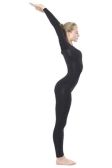
The mountain pose is achieved by placing the heels slightly apart, so that toes are parallel. Carry out a back and forth rocking movement on your toes and slowly come to a complete stop. Raise the ankles in order to consolidate the pose while also tightening the leg muscles. Thrust your tailbone towards the floor while lifting your pelvic area towards the navel. Your arms should be resting near your body while you are pushing your shoulder blades backwards.
The clear-cut positive effects of the mountain pose made it the basis of many other poses.

Tadasana implies that the practicing yogi has to discover the meaning of balance and stillness before progressing further. For this reason, the mountain pose is one of the best ways to connect with your inner emotions while uncovering the subtle ways of yoga. The energy channels of the mountain pose traverse your whole body, following the spine, from the back of the neck and on towards the legs.

The next significant standing pose is the Triangle pose, or the Trikonasana. This comparatively easy pose has a satisfactory stretching effect on the spine, giving it a good lateral motion that complements the stretching of alternate forward poses. The straightness of the knees is essential while performing this pose, as this will allow your movements to be fluent and to stretch all the targeted muscles and organs.

Bending to the left and right needs to be done gradually and fluently. This is one of the yoga poses that is good for providing the foundation for the next levels of postures, which are more advanced and harder to perform. The stimulation of the spinal nerves is also useful and it improves complete body flexibility.

In order to enjoy the full advantage of the triangle pose you have to position your body properly. Your feet have to be spread apart while you are pointing to your toes. Try to alternate the pointing motion from your left foot to your right one while keeping a constant rhythm and perfect balance.

After you extend your arms parallel to the floor you should breathe in deeply, allowing the energy to reinforce your movements. While exhaling aim to execute a slight bend to either left or right while sliding your hand down your foot.

This motion requires a lot of flexibility in the lower back muscles area, so a good warm up session is completely essential before attempting the triangle. Yogis who try this pose often notice the sensation of a lighter body, joined with a feeling of mild warmth in the stretched muscles.

Using Yogic Posture Exercises as Workout Routine

yoga training
By Sanjay Johari

The word “YOGA” is derived from Sanskrit, an ancient Indian language. The literal meaning of Yoga is addition, or joining or combining. The practice of Yoga involves a set of routines and carefully controlled lifestyle which help in realizing inner potential, attaining higher consciousness level and aligning or becoming one with the all pervading consciousness or energy level. While attempting to reach the goal, there is tremendous improvement in physical, mental and emotional health.

Yogic postures, called Yogasanas, form one component of Yogic practices. By themselves these postures can bring about awesome benefits in overall fitness. There are prescribed methods of doing these exercises. Basically one has to form the body in a particular posture, hold the body in that posture for sometime and then slowly come back to what we can call the posture of rest. These exercises are characterized by absence of jerks and slow body movements.

To understand these exercises better let us compare them with dynamic exercises with which we are more familiar, such as acrobatics, gymnastics, jogging etc. These exercises are effective on muscular, circulatory and respiratory systems. There are dynamic Yogic exercises (different from Yogic posture exercises) which also stimulate nervous and glandular system. All these exercises involve speed and dynamic body movements resulting in expenditure of energy and perspiration.

In Yogic posture exercises there is deep relaxation and energy conservation resulting in freshness. This is basically a nerve culture as it relaxes the nerves. The exercise starts from the posture of rest. First lie down in this posture, calm down your breathing, calm down your nerves and calm down your thoughts. Then form the posture you have in mind with slow body movement without jerk of any kind. Posture exercises are accompanied by prescribed breathing pattern. This posture is maintained for prescribed length of time which may be several seconds to few minutes. Then come back slowly to the posture of rest. After remaining in rest for 30 seconds to few minutes, the next posture exercise is done. This pattern is repeated for as long as you wish to do the exercise. Normally exercise workout routine for 30 minutes in a day is good enough for an average person.

Doing these exercises regularly gives remarkable benefits. Generally circulation of body fluids improves and metabolic activities become more efficient. Better blood circulation ensures more thorough distribution of oxygen in the body and more complete removal of toxins. Additionally each posture benefits particular set of organs and muscles. Depending upon the need and condition of health, tailor-made set of exercises can be designed.

Many people believe that life-force flows in our nerves. When the flow of life-force is unregulated and uncoordinated it provides conditions for development of body disorders or ailments from within the body. Yogic posture exercises work very well in this area and prevent ailments. The overall body vigour and freshness are maintained. There is a balance of metabolic activities and unnecessary growths in the body are avoided.

If you are looking for general well being, life free from diseases and lifetime fitness regular Yogic posture exercises can help you. Though these exercises can be combined with other work-outs, they can by themselves provide all the workout routine you need for maintaining a good health.

Sanjay Johari regularly contributes articles to various ezines.

Wednesday, April 19, 2006

Mommy and Me Yoga - Benefits for Life

yoga instructor
By Paul Jerard

What can children and parents gain from practicing Yoga together? When should I start teaching Yoga to my son or daughter? What about Mommy and Me classes? Let’s cover a bit of ground, and establish some realistic expectation for parents and children.

What can children and parents gain from practicing Yoga together? “The sky is the limit,” as they say. Children and parents need more bonding time. We need to eat together and find activities that solidify our relationships. Mommy and Me Yoga classes offer a chance for families to bond, while children are impressionable.

Like any activity, Yoga can be practiced at an early age. As long as Yoga practice is supervised, and the teacher is knowledgeable, parent and child will benefit in many ways. Parents who have no knowledge of Yoga should consider toddler classes or the Mommy and Me Yoga classes.

Classes should be divided according to age. For example – Children who are one to two years of age could be separated from the two to four years of age group. Below twelve months of age, most children are in the watching stage.

Some babies will copy what they see, and you should never expect too much from any child. Children will learn Yoga much better in a patient environment. There should not be a deadline for the time it takes a child to learn aspects of Yoga. Children have a lifetime to learn the many benefits of Yoga. Surprisingly, most children of all ages will demonstrate Yoga techniques they learn at home.

When should I start teaching Yoga to my son or daughter Yoga? Any time is fine, as long as you make it fun. For parents, this is the beginning of learning how to guide without discouraging. Yoga will teach children life skills, such as stress reduction, anger management, goal setting, and enhance athletic ability.

What about Mommy and Me classes? If you have a Mommy and Me Yoga class in your area, it is worth signing up. Parents should let the Yoga instructor lead the class. This seems obvious, but you would be surprised how often parents can be counter productive to children’s activities.

Mommy and Me Yoga classes will contain many of the following aspects: Yoga music, kids music, singing, basic Pranayama, coloring books, theme Yoga classes, Asanas, mixing dance movement with Yoga, drawing with crayons, story telling, Yoga games, focusing drills, relaxation techniques, meditation, and lots of fun.

There are many Yoga books, DVD’s, card decks, coloring books, and Yoga music CD’s for children. With so much to choose from, a child’s attention can be harnessed for constructive purposes. The greatest benefit of all for children is the ability to control their own attention span.

© Copyright 2006 – Paul Jerard / Aura Publications

--------------------------------------------
Visit: Yoga teacher training
--------------------------------------------

If you are a Yoga Teacher, studio manager, blogger, e-zine, or website publisher, and are in need of quality content, please feel free to use my blog entries (articles) – Please be sure to reprint each article, as is, including the resource box above. Namaste, Paul

Yoga Teachers Wanted in Austin, Texas


This one just came in!

Looking for Yoga Teachers in the Austin, Texas Area


There is a Brand New studio opening in Austin, Texas.

The name of the studio is: Studio S and it will open in May.

They are looking for Yoga teachers from various styles of Yoga.

Interested Yoga teachers should apply by contacting Stacy.

Email: studios78759@yahoo.com

Telephone: 512-577-9723

----------------------------------------------------------

Changes to Yoga Teacher Training Newsletter

Those of you who subscribe to our newsletter at www.yoga-teacher-training.org

Our mail system is changing, so that we can reach all of our subscribers. Some of our regular subscribers suddenly stopped recieving our newsletter and notified us.

Please be patient and reconfirm your newsletter.

There are many rules regarding Email, which we want to follow. Reconfirming is one of those new rules for us to reach through the many different Internet servers.

We also want to make sure that, if you want them, you are receiving our latest newsletters.

Sunday, April 16, 2006

Yoga Teacher Training: Become a Yoga Teacher

yoga training
How to Shift Gears, Change Careers, and Become a Yoga Teacher, Part 1


By Paul Jerard


Do you enjoy practicing Yogic exercise? Does teaching seem like your ultimate dream job? Does the thought of becoming a teacher feel like a “calling from within?” How would you pay your bills teaching classes for a living? If your life mission is becoming a Yoga teacher; let’s look at a few practical solutions to your obstacles.


If you feel like a “fish in water” during a Yoga training session you are not alone. However, when teaching Yoga becomes your own long-held aspiration, your spirit will not be fulfilled in the “daily grind.” You begin to feel frustrated in commuter traffic, and during office hours, when your dream job of teaching seems out of reach. So what do you do next - if you really want to become a Yoga teacher?


Apparently, you are focused on your goal, so you are far ahead of the majority of people who do not have a clue about what they really want. Here is a formula, and sequence of events, for you to consider: Focus, action, plan, envision, pace yourself, and goal realization.


Focus: It seems like you already are focused on becoming a Yoga teacher, but you should do some research on what teaching is really like. The types of Yoga teacher training courses will vary, according to style, hours required, on-site training, or correspondence course. Also, the preparation for a 90-minute class is something the average student is unaware of.


Action: Most of the world’s population never gets to this point. Most people fall into a “rut” and never take any action to move forward. This requires even more research about what you plan to do, how you plan to teach, and who you plan to teach to.


Plan: Write your goals down and only share them with people you can trust. Look at your goal of becoming a Yoga teacher as often as possible. Write down the exact chain of events required for you to become a Yoga teacher.


Envision: Visualization is important in reaching any goal. When you practice meditation, you should see, feel, hear, and possibly smell, what your new career of teaching Yogic methodology will be like.


Pace Yourself: There is a saying, “Rome was not built in a day.” If you try to get to your goal of teaching too quickly, you will “burn out” along the way. Life is a journey, not a race; “stop and smell the flowers” along the way.


Goal Realization: Once you become a Yoga teacher, do not “rest on your laurels.” Continuing education will be an important and valuable part of your life. always remember: A teacher is a student of healthy living for life.


© Copyright 2006 – Paul Jerard / Aura Publications


To see our selection of Yoga teacher training and continuing education courses, please visit the following link.


Free report, newsletter, videos, podcasts, and e-Book: “Yoga in Practice.”
If you are a Yoga Teacher, studio owner, blogger, e-zine, or website publisher, and are in need of quality content, please feel free to use my blog entries (articles). Please be sure to reprint each article, as is, including the resource box above. Namaste!

Yoga Teacher Training: Benefits of Yogic Exercise

yoga teacher
Yoga has been practiced by people the world over for many centuries, and it is still very popular today. Many people use it to strengthen the mind, body and spirit connection. There are actually several forms of yoga, and a seemingly infinite array of poses and postures that can be used. But however you choose to make use of yoga exercise, here are the top five benefits of including yoga in your home fitness routine.


1. Yogic exercise not only strengthens your muscles but also increases their flexibility. Many people today use weight training to help build larger more powerful muscles. However, short and powerful muscles can be prone to injury. And flexibility is often ignored in many workout routines. Yoga training can help round out your workout schedule, not only strengthening the muscles of your body but also making them flexible enough to protect you from injury as you exercise.


2. Yoga training also helps increase your energy level. There is an emphasis on increasing the oxygen level in your blood while doing yoga training, and that in turn leads to a more energetic overall feeling. Because of the increased flexibility that yoga brings, there is a tendency to move more anyway because there is a wider range of free movement available in the body. And staying active also leads to higher energy levels as well.


3. Yogic exercise also stimulates endocrine gland function by utilizing twisting and bending poses that activate the endocrine system and helps normalize sluggish glands.


4. One of the most popular benefits of yoga training exercises is that it not only strengthens and improves your physical condition, but also helps relieve stress and tension to improve your mental outlook too. Today's society is fast-paced and hectic, and this can take its toll on one both physically and mentally. Yogic methodology recognizes this, and many of the slow stretching movements and deep breathing that is part of most yogic exercises help clear your mind of the cares of the day and focus it on positive things instead.


5. Closely related to your mood and mental outlook are other psychological benefits of practicing. Very often we carry negative messages and feelings inside, and the practice of yoga helps a person better tune into the person that they are inside, increasing self awareness and self esteem.


There are lots of other advantages and benefits of adding yogic exercise into your fitness workouts, including the fact that it is both inexpensive and relatively easy to do. You may find by incorporating yoga into your daily routine, that even more benefits become readily apparent. This is fine because asana practice is a deeply personal experience. It is not necessarily the same for each person who practices it. But hopefully the benefits of yoga exercise that we have covered in this article will help convince you that it should be a major part of your daily fitness routine from now on.

To see our selection of Yoga teacher training and continuing education courses, please visit the following link.
Free report, newsletter, videos, podcasts, and e-Book: “Yoga in Practice.”
If you are a Yoga Teacher, studio owner, blogger, e-zine, or website publisher, and are in need of quality content, please feel free to use my blog entries (articles). Please be sure to reprint each article, as is, including the resource box above. Namaste!

Saturday, April 15, 2006

Yoga Instructor Training: Why is Teaching so Rewarding?

yoga training
By Paul Jerard

Can teaching Yoga really be that rewarding?


Why do Yoga teachers love their job? Will your Yoga teacher training open up doors for your dream job? Let’s look at some of these questions and see how you can make your dream job become a reality. Even if you have no desire to teach, the practice of Yoga can be your gateway to satisfaction, fulfillment, achievement, and a successful life.


Is teaching classes really a rewarding occupation? After the first student comes up and thanks you for class - that is only the beginning. Some Yoga students have pre-existing ailments and pain. Yoga cannot promise a cure for any ailment, but it can offer less pain, pain management, and sometimes, pain goes away altogether. Your students will definitely tell you what Yogic methodology does for them.


The gratification of helping others, on a daily basis, is spontaneous. This cultivates positive energy from within the core of your inner being. You give the gift of Yoga, but you share positive energy, and usually walk away with more energy than you had before you taught a class.


Being able to make your own hours is a priceless benefit for teachers. You do not have to be in traffic during peak times. You choose the time and place you want to work. If you want to teach Yoga in the morning at a corporate fitness center, senior center, health club, or teach a private session, you can choose the best option for your schedule and “pocket book.”


As a Yoga teacher, you are a perennial student for life. You must pursue knowledge every day, for the safety of your students, to enhance your Yoga teaching practice, and to improve the lives of all those who learn from you.


Teaching any style of Yoga is akin to practicing Jnana, (Union through knowledge), even if you are a Hatha style teacher. How can I state this? Yogic knowledge is infinite and the pursuit of Yogic knowledge is a daily task. Continuing education is an integral part of every teacher’s life.


Otherwise, Yoga instructors will become stale and unsafe in our teaching methods. You see, Yogic methodology is an evolving system of health maintenance, where “nothing is carved in stone.” Therefore, we must learn and share the latest methods for a safe class.


Independence, from the daily grind, is total freedom to meditate, be your own boss, and live the dream of teaching Yoga to others. If you teach Hatha, you will be in the best possible physical shape, due to the physical aspects and living with a moderate diet. You can stop and visit your local bookstore at any time, while the world is in “9 to 5 mode.”


Having time to spend with your family, enjoying life, and having the “time to smell the flowers,” are newfound parts of a Yoga teacher’s life. What is more important than the quality time you have to spend with loved ones and friends? Yogic methodology gives all of us time to reflect on the real priorities in life and could be compared to a brief vacation in your daily life.


Being able to reconnect your spiritual side is a part of Yoga training. Regardless of your religion, you will gradually gravitate back toward “your roots.” You do not have to look outside your religion for answers. The answers to life, and the divine, are within the religion you were brought up with. Yogic methodology is a tool to improve your spiritual health. Yogic philosophy does not discriminate and does not condone intolerance.


All Yoga teachers will pursue the path of self-improvement. It may start as pursuit of physical prowess at first, but will end up being much more. This is why Hatha Yoga is a gateway toward many other forms of Yogic philosophy that benefit the complete health of mind, body, and spirit.


Why do Yoga teachers love their job?


With all that has been stated up to this point, Yoga teachers and their students are some of the happiest people in the world. This comes at a time when the vast majority of humankind is stressed out, having anxiety attacks, and feeling aggression. Words like tranquility, harmony, success, and gratification, seem like a myth to those who do not practice Yoga on a regular basis.


On another note, you have control over your job. Yoga teachers choose the age group they want to teach. You can teach a particular age group or all ages.


The time and place are up to you. If you are a late riser, you can stay in bed. If you are an early riser, you can teach in the early morning and “close up shop” earlier in the evening.


What if you do not want to become a Yoga teacher?


Will your Yoga training open up doors for your dream job? The fact is - Yogic methodology gives all of us the power of self realization. We become aware of the real priorities in life. There is no better gratification than self-help and being able to help others.


© Copyright 2006 – Paul Jerard / Aura Publications

To see our selection of Yoga teacher training and continuing education courses, please visit the following link.
Free report, newsletter, videos, podcasts, and e-Book: “Yoga in Practice.”
If you are a Yoga Teacher, studio owner, blogger, e-zine, or website publisher, and are in need of quality content, please feel free to use my blog entries (articles). Please be sure to reprint each article, as is, including the resource box above. Namaste!

Saturday, April 08, 2006

How to Teach Yoga in the Corporate Marketplace, Part 2

500 hour yoga teacher training workshop
By Dr. Paul Jerard, E-RYT 500

The previously mentioned benefits of Yoga, for companies, are just the “tip of the iceberg,” when you consider that Yoga also teaches gradual lifestyle changes, exercise as a regular component of life, a moderate diet, anger management, and stress reducing techniques.

For most Yoga teachers, bragging does not come easy. Yet, the public cannot see the obvious benefits of Yoga, unless you point them out. When you decided to become a Yoga teacher, you also decided to educate the public about Yoga.

When Yoga instructors mention these points in their marketing materials, this becomes an offer that defines Yoga’s many benefits, instead of supposing that a corporate decision maker knows what Yoga is. When it comes down to it, you should be able to explain the benefits of Yoga in a paragraph and have it etched into your memory.

This prepares you when you talk to the public about what you do. To state: “I teach Yoga classes,” is not enough of an explanation - if the person you talk to has a mental picture of Yoga as just a bunch of pretzel poses, displayed by show-offs.

Your letters, to local companies, should be as long as needed, but you should also mention the benefits of having a corporate Yoga program in the first paragraph or two. The decision maker, who reads your letter, will see the benefits, or not, but if you have captured his or her interest, he or she will continue to read.

You could refer potential companies to your Yoga website, as well. However, if you have captured a prospective decision maker’s attention, you had better fully explain the benefits of a Corporate Yoga program, while you have captured his or her attention.

I can already hear the complaints, “I wanted to become a Yoga teacher, not a copywriter.” If you can talk, you can write. After you write, have your copy proof read, a few times, by someone who is good at it. If you really need a copywriter, feel free to contact me, but please understand that quality copywriting is not cheap.

Let’s get back to the types of injuries Yoga workshops can prevent. For office workers, Yoga can help stretch out connective tissues in the wrists, hands, fingers, elbows, shoulders, neck, and back.

All of these areas can stiffen up through repetitive motion. Add to this fact, that all of an office worker’s muscle groups can become very tense and create backaches, headaches, anxiety, hyper tension, and many more ailments.

Manufacturing companies, with workers who assemble products, also see a multitude of injuries - from industrial accidents to repetitive motion injuries - specific to the job. Yoga instructors can teach how to shift weight properly without injury. Developing awareness, or “living in the moment,” can also help reduce accidents.

The fact is, Yoga training is totally beneficial to all workers, regardless of their specific duties. It is the responsibility of Yoga teachers to convey this message to the corporate decision makers and the public. Job opportunities for Yoga teachers are all around us, but we must act in order for the corporate world to react.

© Copyright 2006 – Paul Jerard / Aura Publications


To see find out more about yoga or to see our selection of affordable courses, including our online hatha yoga certification programs, please use the yoga resources on the right side of this page.

If you are a teacher, yoga studio manager, blogger, e-zine, or website publisher, and are in need of quality content, please feel free to use my blog entries (articles). Please be sure to reprint each article, as is. Namaste!

How to Teach Yoga in the Corporate Marketplace, Part 1

affordable 500 hour yoga certification online
Dr. By Paul Jerard, E-RYT 500

Many instructors, and Yoga teacher training interns, are seeking methods for reaching into the corporate sector. After all, the corporate sector is almost as alluring as a government contract. Yet, there is a mystery surrounding how Yoga teachers should enter the corporate world. Below are some of the most effective ways to establish a strong business as a Corporate Yoga Teacher.


Yoga offers many health solutions to the masses, but for the corporate world, Yoga offers solutions for accident prevention, injury prevention, employee job performance, and cutting down on “sick time.” Some “forward thinking” companies have corporate fitness centers, group fitness classes, and Yoga classes.


However, Yoga instructors still have to explain what exactly they teach. For any teacher, this is a great chance to redefine the purpose of Yoga. This is an opportunity for Yoga instructors to explain how learning Yoga will fulfill the needs of responsible companies. By taking preventative action for their own employee’s sake, these companies will save money in worker’s compensation claims and improve their overall production.


It is unfortunate that greed and fear are the prime motivators involved in buying most products and services. Another prime motivator is the actual need for your product or service. As teachers, we offer the service of education for the purpose of prevention and complete health maintenance.


Corporate Yoga teachers are addressing something more powerful than fear and need - combined. That is the reality, and experience, of paying more, every year, for worker’s compensation claims. Real experience is more powerful than perceived fear. Yoga programs, for the corporate sector, offer very real solutions.


This is where the strength in a Corporate Yoga program shows. All companies, and especially the larger ones, know the harsh reality of paying for accidents or repetitive motion injuries. Most companies have also experienced a dip in production due to increased absenteeism. So, the “bottom line” is that Yoga training offers many solutions for companies, which want to take action.


What should Yoga teacher’s mention in their brochures, letters, post cards, faxes, Email, and flyers? If you are sending anything electronically, please make sure you have permission. With that said, Yoga training offers businesses solutions such as: Improved physical balance, flexibility, coordination, awareness, self-discipline, goal setting skills, and how to effectively use your body for leverage without causing injury. As a Yoga teacher, you could offer a short-term “Yoga workshop for injury prevention,” as an introductory program to “get your foot in the door.”


© Copyright 2006 – Paul Jerard / Aura Publications


To find out more about yoga or to see our selection of affordable courses, including our distance learning yoga teacher training intensive programs, please use the yoga resources and information on the right side of this page.

If you are a teacher, yoga studio manager, blogger, e-zine, or website publisher, and are in need of quality content, please feel free to use my blog entries (articles). Please be sure to reprint each article, as is. Namaste!

Find Your Inner Calm

A relaxed day begins with a good night’s sleep. Aura Wellness Center offers an online Yoga Nidra course which includes content to help you l...