Translate

Friday, August 25, 2006

How Could a Shy Person Become a Yoga Teacher?


By Dr. Paul Jerard, E-RYT 500

The calling to teach Yoga classes can reach into any of us, but what about obstacles which hold each of us back. A shy person may want to become a Yoga teacher, but how can he or she develop the voice of a Yoga teacher?

For an aspiring Yoga teacher, shyness is like a prison which stops him or her from life’s rewards. This person knows what to do, but feels serious anxiety when having to address a person or when having to speak in front of a group.

So what is a shy, but aspiring Yoga teacher to do, when confronted with this impasse? Should he or she give up the dream of becoming a certified Yoga teacher? Some trainers of Yoga teachers would agree, but the truth is there is a solution for the shy, but aspiring Yoga teacher.

Luckily, we are surrounded by recording devices. You can record your voice or film a mock class to develop your Yoga teaching skills. Watch the recording of yourself teaching Yoga, and later, practice along with the film or the audio recording. Then you can make corrections as you deal with the learning curve involved in becoming a Yoga teacher.

If you have some areas in your video or audio recording that need work; you will find a solution, but you must be patient with yourself. We are our own worst critics. This is just a part of the learning process in becoming a Yoga teacher. It is guaranteed that if you try, you will succeed, and you will not be let down.

Many of my best Yoga teacher training graduates spent their lives under estimating themselves, but found independence and a better quality life, teaching Yoga. The harshest judge many of us face on a daily basis is ourselves.

This is not an exercise in self-criticism, but a proven method for developing your Yoga teaching skills. Do not “beat yourself up,” but do take a constructive look at ways you can improve the range of your voice, cueing skills, and your Yoga lesson plan.

You should also seek out a trusted friend or an experienced Yoga teacher for constructive advice. Some Yoga teacher mentors will tutor you through any part of learning process.
Later, you may need at least one student and you can film your lesson plan in any open room. Some Yoga teacher interns have filmed a class outside, depending upon the season. Teaching Yoga in different settings will also build new found confidence.

You will learn to develop your own lesson plan. This is not acting, but a way to see your personality evolve into a Yoga teacher. This evolution of personality knows no boundaries. Most Yoga teachers are very confident and make the most out of enjoying life to its fullest potential every day.

To be honest, I was nervous when I taught my first Yoga class. I never thought I would be a public speaker, and I never considered that I would some day train Yoga teachers from every part of the earth. The raw skills are within all of us, but your dreams will not be realized without positive action by you.

Life happens, and hopefully, most of us change for the best. As a result, you will help others and have a tremendous feeling of satisfaction, when you become a Yoga teacher.

© Copyright 2006 – Paul Jerard / Aura Publications


To see find out more about yoga or to see our selection of affordable courses, including our online hatha yoga teacher training programs, please use the yoga resources on the right side of this page.

If you are a teacher, yoga studio manager, blogger, e-zine, or website publisher, and are in need of quality content, please feel free to use my blog entries (articles). Please be sure to reprint each article, as is. Namaste!

Saturday, August 12, 2006

What Else Should a Hatha Yoga Teacher Know About Teaching Yoga Classes?

500 hour yoga certification course
By Dr. Paul Jerard, E-RYT 500

Yoga teacher ethics should be thoroughly covered in all accredited Yoga certification programs. With the current laws about harassment, all Yoga teachers, and anyone who works with the public, should beware. The less said, in your Yoga class about trivial matters, the better.

Just like Yoga teachers often say to their students, “Stay in the moment.” Within your class, “it’s all about Yoga” and anything else beyond that can be open to misinterpretation. Walk the middle path, avoid extremes, show loving kindness, and maintain a standard of professionalism within all of your Yoga classes.

Communication should be clear at all times. You must demonstrate, communicate verbally, and assist, if you have permission to do so. Always ask permission before making a physical assist during Asana practice.

Chakras are the energy centers of the physical and astral body. Yoga teachers know about balancing and cleansing them. Most Yoga teachers are familiar with the seven main Chakras, but there are many more. No one should play with “Chakra Awakenings,” without proper guidance from a Guru.

Bandhas are the many locks, but Hatha Yoga teachers should know Mulha Bandha, Uddiyana Bandha, and Jalandhara Bandha very well. These are the three main Bandhas.

Mudras are gestures and they are often integrated with specific Pranayama techniques for healing. Not all Mudras are performed with the hands. In Sanskrit Mudra means “seal.” There are many Mudras and learning this is part of a Hatha Yoga teacher’s continuing education.

The Six Kriyas or Shatkarmas are the six hygienic “deeds” or “actions.” A Yoga teacher should be clean in mind, body, and spirit. Every Hatha Yoga teacher is familiar with these six Kriyas.

Meditation is a part of each form of Yoga. It is a tool for clearing, calming, and focusing your mind, but there are also many methods of meditation. Each path of meditation leads to tranquility.

All Yoga teachers should practice meditation twice per day. Guiding Yoga students is one thing, but a Yoga teacher’s meditation practice should be regimented.

A Yoga teacher should also be familiar with relaxation methods, specially, stage-by-stage relaxation. This relaxation method should be practiced privately, and Yoga teachers should make their students familiar with this technique.

With all of the above points mentioned, you can now see why the jump from Yoga student to Yoga teacher will take some time and serious practice.

© Copyright 2006 – Paul Jerard / Aura Publications


To see find out more about yoga or to see our selection of affordable courses, including our online hatha yoga teacher training programs, please use the yoga resources on the right side of this page.

If you are a teacher, yoga studio manager, blogger, e-zine, or website publisher, and are in need of quality content, please feel free to use my blog entries (articles). Please be sure to reprint each article, as is. Namaste!

Friday, July 21, 2006

What Should a Hatha Yoga Teacher Know? – Part 5


By Dr. Paul Jerard, E-RYT 500

Competent Yoga teachers should have enough knowledge to work with special populations. This includes students with disabilities, seniors, and many more specialized groups with physical limitations. The reason is that Hatha Yoga is a health maintenance system, but some people only look at the superficial aspects.

If a Yoga teacher is only capable of instructing elite athletes who are 16 to 25 years of age, that’s wonderful. However, such a Yoga teacher should accept the title of “Yoga fitness coach,” as this is a limited method for teaching Yoga students.

As Yoga teachers, we always remember the students who can turn their bodies into pretzels, but that is not all there is to Hatha Yoga. If Yoga were a physical competition, we could invite some top gymnasts to teach classes and retire from teaching Yoga because we were too old to perform feats that impress a crowd.

This is not meant to imply disrespect to young gymnasts, martial artists, dancers, or any other highly trained athlete. There is a tremendous amount of knowledge, effort, work, and time that is involved in their specific training. Therefore, the same can be said for Yoga; since teaching Yoga requires in-depth knowledge and training.

Some of the children, I have trained, around 10 years of age are capable of performing amazing asanas with fantastic form. Should they be teaching Hatha Yoga to the rest of us? By now, I hope you understand my point.

Many Yoga teachers work with special populations because it challenges the mind. You have to research ailments, consult with other Yoga teachers, and find solutions to problems. This might be frustrating to a Yoga teacher who wants to show what he or she can physically do.

Therefore, a Yoga teacher who has not matured much past “showing off” should not be teaching Yoga to special populations. As long as he or she doesn’t hurt any elite athletes, everything should be fine. Some Yoga teachers are capable of working with the young and the old Yoga students, within the course of a week, but this is not usually the case.

The key ingredients for teaching Yoga to special populations are compassion, patience, understanding, and maturity. When Yoga teachers work with these groups, we always remember the fantastic comebacks Yoga students made from a stroke, heart attack, ailment, disease, trauma, or a special condition.

To be in the presence of a positively charged human spirit is an amazing feeling. This is what usually happens when Yoga students, who the world might have given up on, make a come back from a near death experience. These very special Yoga students will never be forgotten due to their indomitable spirit.

© Copyright 2006 – Paul Jerard / Aura Publications


To see find out more about yoga or to see our selection of affordable courses, including our affordable yoga teacher training online programs, please use the yoga resources on the right side of this page.

If you are a teacher, yoga studio manager, blogger, e-zine, or website publisher, and are in need of quality content, please feel free to use my blog entries (articles). Please be sure to reprint each article, as is. Namaste!

Thursday, July 20, 2006

What should a Hatha Yoga Teacher Know? – Part 3

hatha yoga teacher certification session
By Dr. Paul Jerard, E-RYT 500

Niyamas are the ethical observances of Yoga. Yoga teachers should know them by heart and they do not conflict with any law or religion.

Shaucha: To put it simply be clean in hygiene, diet, and behavior. Hygiene and a Sattvic diet can become a daily ritual, but avoiding unhealthy or unclean thought is a daily challenge. This means controlling angry thoughts, angry actions, and suppressing the ego as much as humanly possible.

Santosha: This is commonly considered to be contentment, but it is also acceptance of life as it is. This is most difficult to attain in societies where material gain is the number one objective. Acceptance does not mean giving up but accepting what we cannot control. When we realize there is much in life that we cannot control we open the door to inner peace.

Tapas: When we think of Tapas the first word that comes to mind is austerity. This is fine but Tapas is way of life based on fortitude, perseverance, dedication, discipline, and regular Yoga practice put into action.

Tapas will produce results, but may require you to practice Yoga or do something good for another person, when it is much easier to eat a chocolate doughnut. One of the biggest problems with the world today is the lack of commitment toward goals.

Swadhyaya: This is taking the time to study sacred scriptures of your specific religion. The answers to all your spiritual questions can be found within them. You do not have to change your religion, but the more you read from your own religion’s scriptures, the more ways you can learn to appreciate people who practice a different religion.

If you take the time, you will see commonality in the principles of all the major religions. Jesus said, "Do to others what you would have them do to you." All of the world’s religions have a similar saying, but who really puts the words into practice and action? Only an enlightened person would make a statement such as: "Hurt no one so that no one may hurt you." This statement was made by Mohammed.

Therefore reading, and studying Holy Scriptures mean nothing if you do not take positive action from what you learn. All of the scriptures tell us to live in peace. The worst crime against humanity is when a political or religious leader preaches hate and incites war or killing.

Ishwara Pranidhana: Acknowledge God as a supreme being by whatever name you are familiar with. Pray daily and actively participate in your religion.

© Copyright 2006 – Aura Wellness Center – Publications Division

To see find out more about yoga or to see our selection of affordable courses, including our affordable hatha yoga teacher training intensives, please use the yoga resources on the right side of this page.


If you are a teacher, yoga studio manager, blogger, e-zine, or website publisher, and are in need of quality content, please feel free to use my blog entries (articles). Please be sure to reprint each article, as is. Namaste!

Thursday, July 13, 2006

What Should a Hatha Yoga Teacher Know? – Part 1

how to become a certified hatha yoga instructor
By Dr. Paul Jerard, E-RYT 500

Most of the time, prospective teachers have a very strong foundation in Yoga, but sometimes they originally come from a related field like martial arts, Pilates, dance, gymnastics, or fitness. This is fine, but be prepared for a “learning curve” and do not expect to learn all about Yogic methodology and philosophy in one Yoga instructor certification course. Even if you “lock yourself up” in an ashram for years, you should realize that learning Yogic philosophy and methodology is a life-long journey and not a race.

Now, if you come from a related field; you have a lot more mental work to do than a long-time student of Yoga. Hatha Yoga is physical form of Yogic methodology, but being athletic is not as important as the knowledge a teacher should possess. So, what should you know in order to become a Yoga teacher? Below is the beginning of what a Hatha teacher should know in order to successfully teach classes.

I can remember one anxious intern at orientation night who became upset over the fact that we were outlining Patanjali's Yoga Sutras. After one hour, she announced that she strongly felt that all she wanted to learn was how to do hundreds of poses. Although there are many more aspects to learn, some interns are very anxious to learn about asanas (postures). For this reason, anatomy, physiology, and kinesiology should always be covered during a Hatha Yoga teacher training course. Student safety is especially an important issue for those who will be teaching Yoga.

Students are always physically different and Hatha Yoga practice can be made to adapt to anyone; regardless of age or physical ability. Anyone who desires to teach Yoga should have a complete understanding of how the physical body works.

Asanas are the postures held during Yoga practice. Hatha Yoga instructors do not have to know hundreds of asanas to teach a class, but they should be very familiar with 26 to 100 different postures; depending upon the style they teach. Yoga teachers should be able to design a lesson plan using these postures, their variations, and the many other aspects of teaching.

Yoga teachers should know how to modify asanas for their students. Sometimes this could be advising a student in how to use a block, strap, bolster, chair, ball, blanket, or any other prop for proper alignment and safety. Other times, this might be giving a student an alternative variation of an asana.

Yoga teachers should be familiar with contraindications for asanas; which are cautions that can be related to a specific posture. This is very important when working with students who are pregnant, have high blood pressure, or have a specific ailment.

Yoga teachers should take the time to be familiar with each student and his or her particular health condition. This means researching health conditions that students have and staying on top of your own continuing education. After becoming familiar with an ailment; learn how you can help, but never give medical advice.

No teacher should ever put a student at risk. The body of a Yoga student cannot be forced into a position that a teacher feels is correct. Instead the body is gently guided to its natural limits, without pain or discomfort.

© Copyright 2006 – Paul Jerard / Aura Publications


To see find out more about yoga or to see our selection of affordable courses, including our online 500 hour yoga teacher training intensive program, please use the yoga resources on the right side of this page.

If you are a teacher, yoga studio manager, blogger, e-zine, or website publisher, and are in need of quality content, please feel free to use my blog entries (articles). Please be sure to reprint each article, as is. Namaste!

Sunday, July 09, 2006

Teaching Hatha Yoga: The Philosophy of Abundance

how to teach yoga classes
By Dr. Paul Jerard, E-RYT 500

Is abundance just a covert word for “money?” Can money be used for a good cause? Do you wonder why some Yoga Teachers, Gurus, and Swamis frown on the idea of teachers “talking up” the concept of practicing Yoga for abundance?

The reason is quite simple: Most people think of material wealth first. Why? This is an example of survival instinct, and money is a part of survival; but there are many more types of abundance for Yoga students to learn about beside money.

Physical, mental, spiritual, and emotional abundance are worthy of note, but the desire for a better life, by acquiring material wealth, is hard to put out of one's mind. Let’s look at each aspect of abundance from a Hatha Yoga student’s point of view.

Physical abundance could be seen as physical prowess. This is why Hatha Yoga has become so popular outside of India. When a new student becomes proficient in Hatha Yoga, he or she feels better almost immediately; sometimes to the point of ego bolstering and this is not a direction for Yoga teaching to take.

The physical senses are our most primal and can be realized without any difficulty. Your friends, family, and coworkers may even notice the changes that are happening to your body due to Hatha Yoga practice. When teaching Hatha Yoga classes, remind your students to keep their egos in place.

Mental abundance can easily be seen as intelligence. However, a person’s intelligence cannot be demonstrated, unless it is successfully projected and proven through the use of good communication skills. Union by knowledge, which we know as Jnana Yoga, will also require much more work than most people would initially think, and communication is a necessary skill required in order to share knowledge.

Sadly, spiritual abundance is becoming rare in some cultures. The spiritual connection cannot be seen, but can be felt. Unfortunately, we try to measure the spiritual world with scientific instruments from our physical world.

How can you scientifically measure the power of prayer or the benefits of prayer? How does science explain miracles? Science often remains baffled to explain miracles or claims miracles do not exist. Science cannot test, measure or explain the spiritual plane of existence. 

Science and technology are useful in improving the quality of life. On the other hand, science and technology have also created the “virtual world” of video games. Science would verify the virtual world exists because we can see it and measure it.

Emotional abundance is most often taken for granted. Our family and friends provide security, but we wish for more material wealth. When death or illness knocks at our door, all the money in the world may not be enough.

If you have emotional abundance, you are truly rich. When you have material wealth, emotional abundance may be very hard to find because you do not know who your friends really are. Money attracts people, but those people might not have friendship in mind. Many of the financially wealthy are givers, and there will always be someone who wants to take advantage of it.

Now, you see that abundance is many things, but the most valuable treasures in life can be attained by the financially poor. If, or when, you mention abundance in a Yoga class, start with the most important forms of abundance first. If you find yourself with too much material abundance, give the excess to a worthy cause.

© Copyright 2006 – Paul Jerard / Aura Publications


To see find out more about yoga or to see our selection of affordable certification courses, including our 500-hour yoga teacher training program, please use the yoga resources on the right side of this page.

If you are a teacher, yoga studio manager, blogger, e-zine, or website publisher, and are in need of quality content, please feel free to use my blog entries (articles). Please be sure to reprint each article, as is. Namaste!


Friday, June 16, 2006

Teaching Hatha Yoga: The Transformation

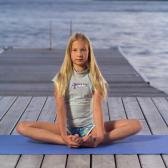
yoga training on the lake
By Dr. Paul Jerard, E-RYT 500

Anyone who decides to become a Yoga teacher goes through many transformations, but your students will go through a variety of transformations, as well. The relationship between Yoga teacher and student is healthy because of the sharing of knowledge. Due to this constant sharing of ideas, the Yoga teacher and his or her students become healthier, wiser, and spiritually connected.

Yoga teacher transformations start from the moment you decide to become a Yoga teacher, but they continue as you decide to take a Yoga teacher training course. After the Yoga teacher certification process, most Yoga instructors continue to learn more about Yoga philosophy, anatomy, other forms of Yoga, meditation, Ayurvedic medicine, or any one of the many subjects that Yoga teachers would logically pursue.

However, teaching Yoga classes on a regular basis is a form of continuing education, as you learn to teach students with different bodies, minds, and health conditions. This is where many Yoga teachers go through a gradual transformation toward Samadhi. Samadhi is the ability to control functions of the mind and body, while eliminating life’s daily distractions from the goal of complete consciousness.

To anyone who has never studied Yoga this seems like “mission impossible.” Yet, Yoga instructors learn to “walk the talk” of Yogic philosophy. What, at one time, seemed like a lofty goal; can actually be realized gradually. This all stems from teaching, sharing knowledge, and becoming a living example of steady Yoga practice. This is not a mystery, but a path that all Yoga teachers should walk.

These changes of body, mind, and spirit do not happen instantly. Some Yoga teachers and serious Yoga practitioners will receive different benefits and reach different levels of Samadhi, as a result of steady practice.

Yoga student transformation can sometimes be more easily felt or seen. In fact, a new student, who has never practiced Yoga before, may find relief from head aches, hypertension, or a back ache within a few classes. This is not a guarantee, but it does happen often. When a student feels the physical or mental benefits of practice he or she becomes transformed by discarding pain and gaining new found enthusiasm.

Within any given Yoga class, there is a form of collective transformation that students and teacher experience. If you take a typical Hatha Yoga training session and consider the warm ups, Pranayama, Sun Salutations, asana practice, meditation, relaxation, or an integration of any other Yogic components; the transformation is quietly happening to the entire group.

There is no mystery here. Transformation of mind, body, and spirit is a result of steady Yoga practice.

© Copyright 2006 – Paul Jerard / Aura Publications

To see find out more about yoga or to see our selection of affordable courses, including our online hatha yoga teacher training programs, please use the yoga resources on the right side of this page.

If you are a teacher, yoga studio manager, blogger, e-zine, or website publisher, and are in need of quality content, please feel free to use my blog entries (articles). Please be sure to reprint each article, as is. Namaste!

Tuesday, June 13, 2006

Teaching Hatha Yoga: What is Normal?

500 hour yoga certification online
By Dr. Paul Jerard, E-RYT 500

Do people puzzle you sometimes? When you think you have heard it all, someone comes up with a “new spin” on an old idea. When you teach Yoga techniques for a healthy mind, body, and spirit; are you trying to help your students reach a normal state? If that is your goal, you may just frustrate yourself and confuse your Yoga students in the process.

The fact is: Yoga teachers should help students improve their lives, but the goals are really up to the students. You can teach goal setting skills, but a Yoga student has his or her own idea of what is normal and what the ultimate goal is.

Many Yoga teachers have a preconceived notion about which kind of behavior is acceptable within their Yoga class. When you trained to become a Yoga teacher, you listened to lectures about Yoga teacher ethics. You learned about what you could and should not do, when teaching a Yoga class. Later, you signed a Yoga teacher ethics agreement.

Then one day, a Yoga student displays behavior that is not in the “text books.” Is that normal? Well, it seems normal to him or her, but you have to be calm and keep your Yoga class as organized as possible.

No one can prepare you for every unexpected situation and life does not go in harmony with the best prepared plans. If you are commuting, by car, to teach your next Yoga class, and you are delayed by an auto accident, or a mechanical break down, your priorities have changed instantly. You are not in control of this situation and all you can really do is “damage control.”

Therefore, we cannot count on a Yoga class, or life, to be normal. Earth quakes, tsunamis, hurricanes, death, and behavior are very hard to predict. All a Yoga teacher can do is help one person, one student, or one Yoga class at a time.

Discard any ideas about what is normal. The universe, Yoga students, and life are constantly changing. As Yoga teachers, we must react to unforeseen problems, when they occur.

Preparation does prevent hesitation, but you cannot prepare for infinite situations.

If a student has a heart attack, in your Yoga class, your swift and even-tempered reaction is all that really matters. It also helps if you have current CPR training and certification, but reaction time is crucial.

Remember this: Expect the unexpected, react calmly to every possible situation, and do not lose sleep over situations that you cannot control.

© Copyright 2006 – Paul Jerard / Aura Publications


To see find out more about yoga or to see our selection of affordable courses, including our online 500-hour yoga teacher training program, please use the yoga resources on the right side of this page.

If you are a teacher, yoga studio manager, blogger, e-zine, or website publisher, and are in need of quality content, please feel free to use my blog entries (articles). Please be sure to reprint each article, as is. Namaste!

Monday, June 12, 2006

Teaching Hatha Yoga: The Value of Props

certified hatha yoga teacher training courses
By Dr. Paul Jerard, E-RYT 500

For Yoga teachers the value of props as a tool for alignment is priceless. Yet it is amazing when a Yoga teacher has a negative view of props and the students who use them. Every once in a while you get to hear contrasting views, but below I have listed two quotes that no one wants to take credit for.

“There are no props in my style, in my classes, or in my town. My Yoga teacher says props are a crutch and there is no reason to make them available to students.”

This is a closed minded view, if I ever heard one. What about the student who cannot bring his, or her, spine in a straight line when practicing Triangle posture? One block, placed in the correct location, will change the alignment of the entire body.

A wall might also make a major difference to some Yoga students. So why not adjust a student into better alignment so she or he can hold the position longer? This will build strength and the Yoga student will actually memorize correct alignment by feeling it.

“Yoga props are fluff. These people are not really practicing Yoga.”

This one comment “takes the cake.” My answer to this person was that she should seek a Yoga teacher who shared her lack of tolerance. Since Yoga training encompasses many things; who should say what “real Yoga” is, or is not?

Props are used by Yoga teachers from many styles of Hatha Yoga such as Iyengar Yoga, Tri Yoga, Restorative Yoga, Prenatal Yoga, Chair Yoga, and many more Hatha sub-styles. To be honest, the Yoga mat is a prop. It was not that long ago when Yogis did not use Yoga mats. Why reject progress being made by some of the most innovative minds in modern day Yoga?

One mistake that most Yoga students and Yoga instructors make is classifying and thinking of postures as beginner, intermediate, and advanced. Each body is unique and will be exceptional in some ways and less exceptional in others. We should stop focusing on the next “advanced posture” and think about the alignment of the Yoga posture we are in at the present moment.

Proper alignment should never be compromised for the sake of the ego. When you know that a blanket, bolster, ball, strap, block, chair, wall, or another prop would help a student’s alignment; using a prop is a “no brainer.”

Yoga teachers should make props available, but also be prepared to improvise. Most teachers do not have every prop available in their Yoga school. This is not a problem, and it will teach you to be creative. One of our Yoga teachers shows her students how to use the kitchen counter, the bottom steps of a stair case, and towels as props for Yoga practice at home.

There is no limit to what can be used for a Yoga prop. Our true potential, as Yoga teachers, is only limited by our thinking.

© Copyright 2006 – Aura Wellness Center – Publications Division

To see find out more about yoga or to see our selection of affordable courses, including our inexpensive hatha yoga teacher training intensive courses, please use the yoga resources on the right side of this page.

If you are a teacher, yoga studio manager, blogger, e-zine, or website publisher, and are in need of quality content, please feel free to use my blog entries (articles). Please be sure to reprint each article, as is. Namaste!


Monday, June 05, 2006

Teaching Hatha Yoga: The Summer Slow Down

how to become a certified yoga instructor
By Dr. Paul Jerard, E-RYT 500

Let’s face it, Yoga teachers who live in Northern climates have been looking forward to a break from the “winter chill.” Your Yoga students have also been looking forward to the warm weather and they want to take a vacation. What can teachers and Yoga schools do to compensate for the “Sumer Slow Down?”

You have taught your Yoga students about empowerment all year, but some students may not return to your regular classes, without a reminder. Many North Americans take a couple of weeks off in July and some summer vacations will be planned for August. Most of my friends in Europe take August off, therefore, Yoga teachers are looking at a minimum of one month during the summer that is predominantly slow, depending on your exact location and culture.


Some Yoga instructors in the Southern United States will experience a slow down, if the temperatures rise too much and too soon. Yoga classes can become sparse, especially if the temperatures jump to the 90’s Fahrenheit during late spring or early summer. So, what action can Yoga teachers take to deal with this vacation season?

How about special classes? Did you ever think about teaching Yoga classes in a pool? What about testing Yoga classes that you had not considered during a busy season? What about an “Introduction to Hot Yoga” or a Vinyasa style Yoga class that is a little warmer than usual? What about testing a short-term pranayama class or Yoga meditation workshop as a “pilot class” for the busy season?

Once again, I ask you to enlarge your vision and “think outside the box.” Do enough ground work and research to become an innovator, rather than “follow the crowd.” Even if your Yoga classes do slow down a bit, you can cater to your “regular students,” who are with you “through thick and thin.” Ask your Yoga students for feedback.

One last major point to bring up: Make sure you are working on “reminders” to your Yoga students who regularly attend classes during cooler weather. It is best to use this time to get a list of all of your Yoga students and prepare for a mailing in late August, or early September.


This is the time when children go back to school, and family plans are made for the fall schedule. If you teach Yoga for a living, your first priority is to thank your students for their past participation and remind them that you still teach Yoga.

It is very easy for anyone to forget their priorities, and students are no exception. Yoga instructors contribute to the well being of a student’s mental, physical, and spiritual health. When you see inactive Yoga students around town, they often thank you for what they have learned from you.

Therefore, do not take a summer slow down personally. This is a season that you should make the most of by taking action and testing new ideas for your Yoga school.


© Copyright – Aura Wellness Center – Publications Division


To see find out more about yoga or to see our selection of affordable courses, including our online hatha yoga teacher training intensive courses, please use the yoga resources on the right side of this page.

If you are a teacher, yoga studio manager, blogger, e-zine, or website publisher, and are in need of quality content, please feel free to use my blog entries (articles). Please be sure to reprint each article, as is. Namaste!



Sunday, June 04, 2006


Yoga Teacher Training and Yoga Certification Choices

By Paul Jerard

The following is an overview of the most popular Yoga teacher training methods. These days, there are so many options for Yoga teacher certification, that it might be good to get a general idea of Yoga teacher training courses first.

Onsite Yoga Teacher Training classes are usually held at Yoga studios and can last anywhere from one month to two years, depending on the depth of the material covered. These Yoga training sessions may meet every weekend or for weeks in succession.

If you have a regular job, it is best to find a Yoga teacher training course that works around your schedule and meets on weekends or evenings. It will be hard to explain your absence to your present employer; especially if you tell the truth, which is: You want to train to become a Yoga teacher.

Training for Yoga Teachers at a Yoga ashram, or Yoga retreat, is usually complete immersion without any of life’s daily distractions. Chances are there are living quarters for Yoga teacher interns and the staff. If you have no family or employer obligations, this is a great way to learn how to become a Yoga teacher. Many Ashrams function like universities, so it is a great atmosphere to study Yoga teacher training.

Luxury Vacation Yoga Teacher Training has become much more popular than most of us would have expected. You would study at a Yoga teacher training intensive in an exotic location. This is also complete immersion within the study of Yoga, but with all the “creature comforts.” If you have the financial resources, this might be the Yoga teacher training course for you.

Yoga Teacher Correspondence Courses are good for Yoga students with previous experience. Independent study, to become a Yoga teacher, requires a foundation of knowledge and previous experience. It also helps if you train with a local Yoga teacher or a group of Yoga enthusiasts.

Just make sure the Yoga teacher correspondence course you choose has a complete syllabus. This is a good option for Yoga teacher interns who have obligations at home or at work.

Weekend Yoga Teacher Training Intensives also require a bit more homework and should meet regularly. Do not fool yourself into thinking that you will learn to become a competent Yoga teacher in a single weekend. It just does not happen that quickly.

The study of Yoga is a continuous and never ending journey. Teaching Yoga requires that you become a perennial Yoga student for life. Whichever method you choose to reach your goal as a Yoga teacher, remember that continuing education is a key component to becoming a competent Yoga teacher.

© Copyright 2006 – Paul Jerard / Aura Publications

Learn More about Teaching Yoga.

--------------------------------------------
FREE Yoga Report. FREE Yoga Newsletter.
Bonus: Free Yoga e-Book, "Yoga in Practice."
http://www.yoga-teacher-training.org/docs/Yoga-in-Practice-eBook.pdf
Visit: http://www.yoga-teacher-training.org
Affiliates: http://www.yoga-teacher-training.org/signup.html
--------------------------------------------

Thursday, June 01, 2006

Yoga Teacher Tips: Most Common Yoga Student Corrections

how to get yoga certified
By Dr. Paul Jerard, E-RYT 500

Do you cover a prenatal warning before the start of a Yoga class? Every Yoga teacher should thoroughly go over it when adult female students come to your Yoga classes. You would be surprised how many will not tell you before class.

Also, you may want to add a Prenatal Yoga warning to your initial handout, waiver, or questionnaire, for new students. Prenatal Yoga classes are specifically designed for the safety of pregnant Yoga students. Do not teach pregnant Yoga students without Prenatal and Postnatal Yoga teacher training.

Forward Bend: For students who are in good health and who are not pregnant; the fold should be guided by the breath, while elongating the spine. Then the waistline will gently draw in to a point, while the heart draws toward the toes. This is easier said than done, but will help guide your students.

Neck Rolls, with the head tilted back, can grind the cervical vertebrae against each other, causing premature wear. This is not suggested for Yoga students of any age, especially middle age and up. Your Yoga students might do this warm- up exercise slowly - and that is much better than doing it fast, but it is still not acceptable.

Also related to neck movement - linear movement, and the front part of the neck circle, are fine - if done very slowly, but this still may not be a good idea for your older Yoga students. Any neck movements should be performed in Yoga training sessions, only after gentle isometric exercises for the neck. You should combine Pranayama with these isometric exercises for maximum benefits.

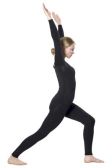
Lunge posture in Sun Salutations: The knee should be right above the ankle during this posture. When the knee is more forward than the ankle, this can cause premature wear of soft tissue within the knee joint.

The only exception to this is when the back knee is on the floor, as this takes pressure off the forward knee. However, if a Yoga student has an existing knee ailment, or is prone to knee problems, the knee should stay directly above the ankle and not beyond it. This may be considered very cautious by some teachers, but Hatha Yoga teachers are supposed to teach restraint and safety during asana practice, at all times.

As a Yoga teacher, your form might be very good, but you will still need to correct all student alignment problems when they arise. In Warrior II, some of your students will need to be reminded to keep the back arm level. It feels normal to them when the back arm is lower.

Tree Pose: Are some of your students are pressing the foot against the side of the knee on the balancing leg? The knee is not designed to take pressure from the side. This could cause premature wear over time. The foot should always be above, or below, the side of the knee - and never to the side.

© Copyright 2006 – Paul Jerard / Aura Publications


To see find out more about yoga or to see our selection of affordable courses, including our affordable online yoga teacher training intensive courses, please use the yoga resources on the right side of this page.

If you are a teacher, yoga studio manager, blogger, e-zine, or website publisher, and are in need of quality content, please feel free to use my blog entries (articles). Please be sure to reprint each article, as is. Namaste!

Yoga Teacher Tips: More Common Yoga Student Corrections

500 hour yoga teacher training tips
By Dr. Paul Jerard, E-RYT 500

Always remember that it is better to be accused of being too cautious, than it is to be accused of negligence within a court of law. The Yoga teacher who is too safe can always find another teaching assignment. Below are some common problems that Yoga teachers should address for the safety of their students.

Spinal Rock: The eyes should focus on your heels, or navel, if possible. This causes the whole spine to round off and “roll like a ball,” as opposed to “crashing” off the floor. Rolling back should only go to the shoulders. Some Yoga students will be injured if they are not cautioned about rolling back on their necks.

During your Sun Salutation, or Vinyasa Sequence, where you perform a Monkey posture, which is also known as, “Flat Back,” the body should take the shape of an inverted “L.” The best way to master this posture is to draw, and elongate your spine, in a straight line, parallel to the floor. A mirror, or knowledgeable Yoga teacher, would be a big help for developing alignment.

You should caution your students about the jump backs on Sun Salutations, or Vinyasa Sequences. Anyone with a back condition can make it worse with the jump back or the jump forward; the reason being that when your feet land on the floor, the shock of the movement goes into the lower spine.

A similar movement we know as the “squat thrust” was contra-indicated by the American Orthopedic Association, a few years ago. This movement is the same as the squat thrusts. Many Yoga teachers are very familiar with this movement from Ashtanga and Vinyasa styles, however, beware that each student is put at risk – no matter how good their back feels today.

In Warrior I, please make sure that your Yoga student’s back foot is turned in 45 degrees.
When the hip rotates forward, in the direction of the forward foot, this puts torque on the back knee. If a student has the back foot out at 90 degrees, this is a great deal of torque, and can cause premature wear within the soft tissue of the knee. It does not matter if this posture has been done this way for 5,000 years - when it can cause injury to a single student.

Upward Dog – Watch for locking elbows – if so, please allow for a slight crack in the student’s elbow joint, as the lockout will cause premature wear to his or her elbow joint.

Downward Dog – Sometimes there is a slight amount of bouncing going on in this posture. You want to make sure that your Yoga students slowly drop into position, without any bouncing. The reason is that bouncing is a “ballistic stretch” and can cause micro tears in the muscle tissue, which will result in less protection of the nearby joint.

Cobbler Pose – The same bouncing ballistic stretch that can cause micro tears in the muscle tissue occurs when the knees bounce up and down. If you have a Yoga student who does this - stop him or her immediately.

Lastly, challenge your students to be the best they can be, but never put a single Yoga student in harm’s way. A Yoga teacher is primarily supposed to guide his or her students toward consistent healthy living.

© Copyright 2006 – Paul Jerard / Aura Publications


See the yoga resources in the right hand column of this page, feel free to visit our teacher community or see our selection of online yoga instructor certification programs.
If you are a teacher, yoga school manager, blogger, e-zine, or website publisher, and are in need of quality content, please feel free to use my blog entries (articles). Please be sure to reprint each article, as is, including the resource box above. Namaste!

Tuesday, May 30, 2006

Yoga Teacher Training: Pregnant Students

yoga training
Yoga and Pregnancy

By Mike Herman

If you’re pregnant and are already in yoga classes, don’t be afraid to take a break from your current classes or to take a class that is less strenuous. Even if you haven’t gone public with your pregnancy yet, you should have a confidential talk with your instructor let him or her know of your pregnancy, the instructor will then be able to assist you with less strenuous postures or teach you poses that you aren’t doing that will help you.

If you are new to yoga and are looking for a low impact way of exercising the best thing to do is to look for a prenatal yoga class. These classes are designed for pregnant parishioners and you can start them as early in your pregnancy as you want. If you are having morning sickness, you may want to wait until that passes and that usually is the second trimester.

If you have been practicing yoga for a while, you still may find your regular classes seem to be too intense for you. Prenatal yoga training classes may seem too easy, so at this point you will need to decide which class you should take on a given day depending on how you feel.

The solution might also be to include some prenatal poses that have been adapted into your regular routine. If you are in a class, your yoga instructor may help you with special poses developed for pregnancy and your changing body. When you enter the second or third trimester, you may find that prenatal classes are more suited for your body and its changing shape.

If you practice with videotape, you should buy a prenatal video. Some of the recommended first trimester poses are ones that open the hips such as Pigeon, Triangle, Warrior II, and Knee to Ankle.

Second Trimester?

Are you an enthusiast and want to continue to do your Yogic exercise practice while pregnant? Yogic exercise can continue to be practiced during your second trimester with just a few precautions. By the second trimester, your morning sickness should be over and should be feeling better.

If you haven't yet started yoga training yet and wish too - you are in luck, "now is the perfect time to start".  Always contact your health care provider before starting any new exercise program. This is a good rule of thumb even if you aren’t pregnant.

Start with finding a class with an excellent and experienced instructor. Many women enter yoga for the first time during their pregnancy so don't worry that you will be the only new pregnant woman in class. Talk with your friends and get references for a prenatal Yoga instructor.

If you are already practicing yoga, there is no need to give up your classes if you feel strong enough to do them. You can incorporate your own adaptations to the poses when fitting. As your belly grows, the more adaptations you will need to make.

You will want to take any inversion pose to the wall if it poses a risk of falling. If you aren’t comfortable doing these poses, then it’s all right to give your body permission to skip them. One that you can practice safely is the Legs Up the Wall Pose.

If you practice at home, you still might consider going to a prenatal class at least once or twice a week. You will be able to connect with other pregnant women there and know you are not alone in what you are going through.

Some Yoga Poses you will want to avoid during your second trimester or at least adapt them to your growing belly. Deep twists from the belly compress all of your internal organs, including the uterus. You can continue to do the twists, just do them gently from the shoulders instead of the belly.

Of course avoid any jumping or poses that require back bends. Abdominal strengtheners should be avoided, as they need to be softened in preparation for birth. Of course, lying on the belly should not be practiced once you begin to show. It will probably be too uncomfortable for you anyway.

Practice the Birthing Breath, deep inhalations in through the nose and exhaling slowly through the mouth.

Third Trimester?

In the third trimester of your pregnancy, everything becomes more difficult to do. Tying your shoes, climbing upstairs and even turning over in bed can become a chore. Yoga will become more difficult and you should use more caution but there isn’t any reason you can’t continue to practice yoga up to your due date.

For those that were working and are now on maternity leave, you might just now be finding time to do prenatal yoga. You will still benefit from doing gentle yoga stretches and poses. If you are attending a class, be sure your Yoga teacher knows when you are due. Remember, now is the time to take it easy. It isn’t the time to be an overachiever. Always check with your doctor before starting any exercise program or if you have questions about which prenatal yoga is best for you.

If you are listening to your body, it will tell you what you can and can't do. Continue to stay in touch with your body, allow your body to take it easy. It’s a good idea to continue practice breathing, as this will help you during the birth process.

Some poses that are recommended for the third trimester are hip openers such as Pigeon, Warrior II, Triangle, and Knee to Ankle. All four Cat-Cow positions will also help by preparing the baby for birth. They will help the baby get in proper position, head down and it’s back turned toward your belly.

Of course, the same poses you adapted during your second trimester must be practiced with extra caution. No jumping, or twisting from the belly, deep back bends or anything that involves strengthening the abdomen. Goes without saying, there shouldn’t be any poses that need you to lie on your belly.

One of the more important aspects to remember when you are practicing Yoga during pregnancy is to control your breathing and listen to your body. Practicing yoga and listening to your body will help prepare mentally for the birth process. As you learn to be in the moment and quiet your inner body, Yoga will help with that as well as your breathing exercises.

Pregnancy doesn’t have to be an obstacle in your practice of Yoga. In fact, it can be a vital part of your prenatal routine. With poses that are designed for pregnancy and incorporating routines that will help you to have an easier birth. Some routines you will find you are unable to do. If you are unsure of the poses, listen to your body. It will tell you which ones that are too much for you in time in your pregnancy.

So, don’t be afraid to continue your Yoga practice. It may mean that you will have an easier delivery and a faster recovery after birth. It also should make getting into shape after birth easier as well.

Saturday, May 27, 2006

Yoga Teacher Training: The Right Time and Place

yoga training
Yoga and Self Analysis: The Right Time and Place

By Paul Jerard

As many of you know, Yoga is something you can practice any time. You can be mindful of others, show loving kindness, forgive, give to charity, keep good posture, eat right, and practice Yogic breathing techniques during your day, without much problem.

Those who practice physical forms of Yoga training will have to set aside time during the day for Asanas. Meditation is practiced without any distractions, therefore, you will have to budget your time. It may be more convenient to practice meditation after your Asanas are finished. So far, everything seems easy enough for the average Yoga practitioner to fit into his or her lifestyle.

Alternately, self analysis is a part of Yoga teacher training that many practitioners do not have time for. You cannot practice self analysis when you are “in the heat of battle.” This preoccupation will cause self doubt if you are in a pressurized situation. You must react to life as it is right now, and be in the moment to find solutions.

This seems to be a paradox: We think of self analysis and Yogic methodology as empowering practices. We do not associate self analysis with temporary mental paralysis.

However, in order for you to make significant discoveries about yourself, and consider how to apply your skills to life, there is a certain amount of time needed to envision the fruits of your labor. You will then have to put your visions, plans, and goals into action.

So, how, and when, do you make the time for a self analysis session? Much like Yogic meditation, you need a quiet time and place. Try to allow one hour per week; and if you come up with a blank, at a certain point, finish your session with meditation. You can meditate on a related point, or practice, any familiar Yogic form of meditation.

Self analysis sessions require a pen and paper. Although some of you may opt for a PDA, or a laptop, some will still prefer the experience of putting an idea down on paper. This will also give you something to reflect on during the week and in the following sessions.

Just like Yoga teacher training, self analysis can be practiced with others, with a coach, or with a master teacher. The big difference is the direction your session will go in.

Anyone you choose to share thoughts with must be trustworthy or there will be no benefit. Therefore, much like your meditation sessions this is very much a rewarding form of self discovery. If you have any difficulty, this skill can be improved by practicing with a competent Yoga teacher.

© Copyright 2006 – Paul Jerard / Aura Publications

Wednesday, May 24, 2006

Yoga Training

yoga training

Yoga Equipment
By David Wells


Yoga is quickly becoming very popular, and for good reason. Yoga will make almost anyone feel better and in shape. For most, yoga is the ideal exercise to keep your body in shape while helping you relax and unwind at the same time.

Research has demonstrated that yoga can help control anxiety, reduce asthma, alleviate arthritis symptoms, lower blood pressure, eliminate back pain, and benefit patients suffering from multiple sclerosis, chronic fatigue, epilepsy, diabetes, headaches, stress and much more.

Yogic exercise offers a lot of benefits. Perhaps its most important benefit is it's ability to reduce tension and stress. Stress can lead to a whole slew of other health problems.

Yoga training increases muscle tone, strength, stamina and flexibility. If you are overweight, yogic exercise can help you gently reduce your weight and keep the pounds an inches off. Yogic exercise can burn excess fat and give you your desired figure.

Yoga can also help you improve your concentration and enhance your creativity. It can help you to think more positively and learn to live free of anxiety.

Your body needs to relax from time to time. Sometimes, work can leave us feeling spent and exhausted. During busy days, we may not be able to unwind because work is still on our mind. Yogic exercise can help you create a sense of calmness and well being to replace this stress from work.

Yoga training exercise improves circulation. Your organs and veins need to move and stretch to function properly. Yogic fitness can also help stimulate your immune system to protect you from disease.

Don't confuse it with religion. It's just a method of exercise with a long list of benefits to your health and well being. If you begin to feel more spiritual it's probably because you are more in tune with your body and life than you were before you started training.

The pressure and demands of life can leave us stressed out. We find ourselves rushing most of the time with the deadlines and hassles we need to keep up with. This leaves us little time to rest our minds and relax.

These are just a few of the many powerful benefits yoga training has to offer. Find a little time to dedicate to it every day and you will begin to feel more calm, certain and relaxed than you thought possible.

Make the most of your exercise witht he right yoga training equipment.

Find Your Inner Calm

A relaxed day begins with a good night’s sleep. Aura Wellness Center offers an online Yoga Nidra course which includes content to help you l...