Translate

Sunday, April 16, 2006

Yoga Teacher Training: Become a Yoga Teacher

yoga training
How to Shift Gears, Change Careers, and Become a Yoga Teacher, Part 1


By Paul Jerard


Do you enjoy practicing Yogic exercise? Does teaching seem like your ultimate dream job? Does the thought of becoming a teacher feel like a “calling from within?” How would you pay your bills teaching classes for a living? If your life mission is becoming a Yoga teacher; let’s look at a few practical solutions to your obstacles.


If you feel like a “fish in water” during a Yoga training session you are not alone. However, when teaching Yoga becomes your own long-held aspiration, your spirit will not be fulfilled in the “daily grind.” You begin to feel frustrated in commuter traffic, and during office hours, when your dream job of teaching seems out of reach. So what do you do next - if you really want to become a Yoga teacher?


Apparently, you are focused on your goal, so you are far ahead of the majority of people who do not have a clue about what they really want. Here is a formula, and sequence of events, for you to consider: Focus, action, plan, envision, pace yourself, and goal realization.


Focus: It seems like you already are focused on becoming a Yoga teacher, but you should do some research on what teaching is really like. The types of Yoga teacher training courses will vary, according to style, hours required, on-site training, or correspondence course. Also, the preparation for a 90-minute class is something the average student is unaware of.


Action: Most of the world’s population never gets to this point. Most people fall into a “rut” and never take any action to move forward. This requires even more research about what you plan to do, how you plan to teach, and who you plan to teach to.


Plan: Write your goals down and only share them with people you can trust. Look at your goal of becoming a Yoga teacher as often as possible. Write down the exact chain of events required for you to become a Yoga teacher.


Envision: Visualization is important in reaching any goal. When you practice meditation, you should see, feel, hear, and possibly smell, what your new career of teaching Yogic methodology will be like.


Pace Yourself: There is a saying, “Rome was not built in a day.” If you try to get to your goal of teaching too quickly, you will “burn out” along the way. Life is a journey, not a race; “stop and smell the flowers” along the way.


Goal Realization: Once you become a Yoga teacher, do not “rest on your laurels.” Continuing education will be an important and valuable part of your life. always remember: A teacher is a student of healthy living for life.


© Copyright 2006 – Paul Jerard / Aura Publications


To see our selection of Yoga teacher training and continuing education courses, please visit the following link.


Free report, newsletter, videos, podcasts, and e-Book: “Yoga in Practice.”
If you are a Yoga Teacher, studio owner, blogger, e-zine, or website publisher, and are in need of quality content, please feel free to use my blog entries (articles). Please be sure to reprint each article, as is, including the resource box above. Namaste!

Yoga Teacher Training: Benefits of Yogic Exercise

yoga teacher
Yoga has been practiced by people the world over for many centuries, and it is still very popular today. Many people use it to strengthen the mind, body and spirit connection. There are actually several forms of yoga, and a seemingly infinite array of poses and postures that can be used. But however you choose to make use of yoga exercise, here are the top five benefits of including yoga in your home fitness routine.


1. Yogic exercise not only strengthens your muscles but also increases their flexibility. Many people today use weight training to help build larger more powerful muscles. However, short and powerful muscles can be prone to injury. And flexibility is often ignored in many workout routines. Yoga training can help round out your workout schedule, not only strengthening the muscles of your body but also making them flexible enough to protect you from injury as you exercise.


2. Yoga training also helps increase your energy level. There is an emphasis on increasing the oxygen level in your blood while doing yoga training, and that in turn leads to a more energetic overall feeling. Because of the increased flexibility that yoga brings, there is a tendency to move more anyway because there is a wider range of free movement available in the body. And staying active also leads to higher energy levels as well.


3. Yogic exercise also stimulates endocrine gland function by utilizing twisting and bending poses that activate the endocrine system and helps normalize sluggish glands.


4. One of the most popular benefits of yoga training exercises is that it not only strengthens and improves your physical condition, but also helps relieve stress and tension to improve your mental outlook too. Today's society is fast-paced and hectic, and this can take its toll on one both physically and mentally. Yogic methodology recognizes this, and many of the slow stretching movements and deep breathing that is part of most yogic exercises help clear your mind of the cares of the day and focus it on positive things instead.


5. Closely related to your mood and mental outlook are other psychological benefits of practicing. Very often we carry negative messages and feelings inside, and the practice of yoga helps a person better tune into the person that they are inside, increasing self awareness and self esteem.


There are lots of other advantages and benefits of adding yogic exercise into your fitness workouts, including the fact that it is both inexpensive and relatively easy to do. You may find by incorporating yoga into your daily routine, that even more benefits become readily apparent. This is fine because asana practice is a deeply personal experience. It is not necessarily the same for each person who practices it. But hopefully the benefits of yoga exercise that we have covered in this article will help convince you that it should be a major part of your daily fitness routine from now on.

To see our selection of Yoga teacher training and continuing education courses, please visit the following link.
Free report, newsletter, videos, podcasts, and e-Book: “Yoga in Practice.”
If you are a Yoga Teacher, studio owner, blogger, e-zine, or website publisher, and are in need of quality content, please feel free to use my blog entries (articles). Please be sure to reprint each article, as is, including the resource box above. Namaste!

Saturday, April 15, 2006

Yoga Instructor Training: Why is Teaching so Rewarding?

yoga training
By Paul Jerard

Can teaching Yoga really be that rewarding?


Why do Yoga teachers love their job? Will your Yoga teacher training open up doors for your dream job? Let’s look at some of these questions and see how you can make your dream job become a reality. Even if you have no desire to teach, the practice of Yoga can be your gateway to satisfaction, fulfillment, achievement, and a successful life.


Is teaching classes really a rewarding occupation? After the first student comes up and thanks you for class - that is only the beginning. Some Yoga students have pre-existing ailments and pain. Yoga cannot promise a cure for any ailment, but it can offer less pain, pain management, and sometimes, pain goes away altogether. Your students will definitely tell you what Yogic methodology does for them.


The gratification of helping others, on a daily basis, is spontaneous. This cultivates positive energy from within the core of your inner being. You give the gift of Yoga, but you share positive energy, and usually walk away with more energy than you had before you taught a class.


Being able to make your own hours is a priceless benefit for teachers. You do not have to be in traffic during peak times. You choose the time and place you want to work. If you want to teach Yoga in the morning at a corporate fitness center, senior center, health club, or teach a private session, you can choose the best option for your schedule and “pocket book.”


As a Yoga teacher, you are a perennial student for life. You must pursue knowledge every day, for the safety of your students, to enhance your Yoga teaching practice, and to improve the lives of all those who learn from you.


Teaching any style of Yoga is akin to practicing Jnana, (Union through knowledge), even if you are a Hatha style teacher. How can I state this? Yogic knowledge is infinite and the pursuit of Yogic knowledge is a daily task. Continuing education is an integral part of every teacher’s life.


Otherwise, Yoga instructors will become stale and unsafe in our teaching methods. You see, Yogic methodology is an evolving system of health maintenance, where “nothing is carved in stone.” Therefore, we must learn and share the latest methods for a safe class.


Independence, from the daily grind, is total freedom to meditate, be your own boss, and live the dream of teaching Yoga to others. If you teach Hatha, you will be in the best possible physical shape, due to the physical aspects and living with a moderate diet. You can stop and visit your local bookstore at any time, while the world is in “9 to 5 mode.”


Having time to spend with your family, enjoying life, and having the “time to smell the flowers,” are newfound parts of a Yoga teacher’s life. What is more important than the quality time you have to spend with loved ones and friends? Yogic methodology gives all of us time to reflect on the real priorities in life and could be compared to a brief vacation in your daily life.


Being able to reconnect your spiritual side is a part of Yoga training. Regardless of your religion, you will gradually gravitate back toward “your roots.” You do not have to look outside your religion for answers. The answers to life, and the divine, are within the religion you were brought up with. Yogic methodology is a tool to improve your spiritual health. Yogic philosophy does not discriminate and does not condone intolerance.


All Yoga teachers will pursue the path of self-improvement. It may start as pursuit of physical prowess at first, but will end up being much more. This is why Hatha Yoga is a gateway toward many other forms of Yogic philosophy that benefit the complete health of mind, body, and spirit.


Why do Yoga teachers love their job?


With all that has been stated up to this point, Yoga teachers and their students are some of the happiest people in the world. This comes at a time when the vast majority of humankind is stressed out, having anxiety attacks, and feeling aggression. Words like tranquility, harmony, success, and gratification, seem like a myth to those who do not practice Yoga on a regular basis.


On another note, you have control over your job. Yoga teachers choose the age group they want to teach. You can teach a particular age group or all ages.


The time and place are up to you. If you are a late riser, you can stay in bed. If you are an early riser, you can teach in the early morning and “close up shop” earlier in the evening.


What if you do not want to become a Yoga teacher?


Will your Yoga training open up doors for your dream job? The fact is - Yogic methodology gives all of us the power of self realization. We become aware of the real priorities in life. There is no better gratification than self-help and being able to help others.


© Copyright 2006 – Paul Jerard / Aura Publications

To see our selection of Yoga teacher training and continuing education courses, please visit the following link.
Free report, newsletter, videos, podcasts, and e-Book: “Yoga in Practice.”
If you are a Yoga Teacher, studio owner, blogger, e-zine, or website publisher, and are in need of quality content, please feel free to use my blog entries (articles). Please be sure to reprint each article, as is, including the resource box above. Namaste!

Saturday, April 08, 2006

How to Teach Yoga in the Corporate Marketplace, Part 2

500 hour yoga teacher training workshop
By Dr. Paul Jerard, E-RYT 500

The previously mentioned benefits of Yoga, for companies, are just the “tip of the iceberg,” when you consider that Yoga also teaches gradual lifestyle changes, exercise as a regular component of life, a moderate diet, anger management, and stress reducing techniques.

For most Yoga teachers, bragging does not come easy. Yet, the public cannot see the obvious benefits of Yoga, unless you point them out. When you decided to become a Yoga teacher, you also decided to educate the public about Yoga.

When Yoga instructors mention these points in their marketing materials, this becomes an offer that defines Yoga’s many benefits, instead of supposing that a corporate decision maker knows what Yoga is. When it comes down to it, you should be able to explain the benefits of Yoga in a paragraph and have it etched into your memory.

This prepares you when you talk to the public about what you do. To state: “I teach Yoga classes,” is not enough of an explanation - if the person you talk to has a mental picture of Yoga as just a bunch of pretzel poses, displayed by show-offs.

Your letters, to local companies, should be as long as needed, but you should also mention the benefits of having a corporate Yoga program in the first paragraph or two. The decision maker, who reads your letter, will see the benefits, or not, but if you have captured his or her interest, he or she will continue to read.

You could refer potential companies to your Yoga website, as well. However, if you have captured a prospective decision maker’s attention, you had better fully explain the benefits of a Corporate Yoga program, while you have captured his or her attention.

I can already hear the complaints, “I wanted to become a Yoga teacher, not a copywriter.” If you can talk, you can write. After you write, have your copy proof read, a few times, by someone who is good at it. If you really need a copywriter, feel free to contact me, but please understand that quality copywriting is not cheap.

Let’s get back to the types of injuries Yoga workshops can prevent. For office workers, Yoga can help stretch out connective tissues in the wrists, hands, fingers, elbows, shoulders, neck, and back.

All of these areas can stiffen up through repetitive motion. Add to this fact, that all of an office worker’s muscle groups can become very tense and create backaches, headaches, anxiety, hyper tension, and many more ailments.

Manufacturing companies, with workers who assemble products, also see a multitude of injuries - from industrial accidents to repetitive motion injuries - specific to the job. Yoga instructors can teach how to shift weight properly without injury. Developing awareness, or “living in the moment,” can also help reduce accidents.

The fact is, Yoga training is totally beneficial to all workers, regardless of their specific duties. It is the responsibility of Yoga teachers to convey this message to the corporate decision makers and the public. Job opportunities for Yoga teachers are all around us, but we must act in order for the corporate world to react.

© Copyright 2006 – Paul Jerard / Aura Publications


To see find out more about yoga or to see our selection of affordable courses, including our online hatha yoga certification programs, please use the yoga resources on the right side of this page.

If you are a teacher, yoga studio manager, blogger, e-zine, or website publisher, and are in need of quality content, please feel free to use my blog entries (articles). Please be sure to reprint each article, as is. Namaste!

How to Teach Yoga in the Corporate Marketplace, Part 1

affordable 500 hour yoga certification online
Dr. By Paul Jerard, E-RYT 500

Many instructors, and Yoga teacher training interns, are seeking methods for reaching into the corporate sector. After all, the corporate sector is almost as alluring as a government contract. Yet, there is a mystery surrounding how Yoga teachers should enter the corporate world. Below are some of the most effective ways to establish a strong business as a Corporate Yoga Teacher.


Yoga offers many health solutions to the masses, but for the corporate world, Yoga offers solutions for accident prevention, injury prevention, employee job performance, and cutting down on “sick time.” Some “forward thinking” companies have corporate fitness centers, group fitness classes, and Yoga classes.


However, Yoga instructors still have to explain what exactly they teach. For any teacher, this is a great chance to redefine the purpose of Yoga. This is an opportunity for Yoga instructors to explain how learning Yoga will fulfill the needs of responsible companies. By taking preventative action for their own employee’s sake, these companies will save money in worker’s compensation claims and improve their overall production.


It is unfortunate that greed and fear are the prime motivators involved in buying most products and services. Another prime motivator is the actual need for your product or service. As teachers, we offer the service of education for the purpose of prevention and complete health maintenance.


Corporate Yoga teachers are addressing something more powerful than fear and need - combined. That is the reality, and experience, of paying more, every year, for worker’s compensation claims. Real experience is more powerful than perceived fear. Yoga programs, for the corporate sector, offer very real solutions.


This is where the strength in a Corporate Yoga program shows. All companies, and especially the larger ones, know the harsh reality of paying for accidents or repetitive motion injuries. Most companies have also experienced a dip in production due to increased absenteeism. So, the “bottom line” is that Yoga training offers many solutions for companies, which want to take action.


What should Yoga teacher’s mention in their brochures, letters, post cards, faxes, Email, and flyers? If you are sending anything electronically, please make sure you have permission. With that said, Yoga training offers businesses solutions such as: Improved physical balance, flexibility, coordination, awareness, self-discipline, goal setting skills, and how to effectively use your body for leverage without causing injury. As a Yoga teacher, you could offer a short-term “Yoga workshop for injury prevention,” as an introductory program to “get your foot in the door.”


© Copyright 2006 – Paul Jerard / Aura Publications


To find out more about yoga or to see our selection of affordable courses, including our distance learning yoga teacher training intensive programs, please use the yoga resources and information on the right side of this page.

If you are a teacher, yoga studio manager, blogger, e-zine, or website publisher, and are in need of quality content, please feel free to use my blog entries (articles). Please be sure to reprint each article, as is. Namaste!

Wednesday, April 05, 2006

The Truth about Options for Yoga Teachers, Part 8


By Paul Jerard

Let’s summarize and “recycle” a few points in the previous articles I have written about options for Yoga teachers, who may be considering specialization. These are not all of the options for Yoga teacher’s, to consider, when thinking about how to find employment “outside of the box.” You will need to work on your intuitive feelings to get an idea for the next popular Yoga trend, if that is what you are after.

As any experienced Yoga teacher will tell you; there are many more employment opportunities for Yoga instructors outside the Yoga studios and health clubs. Over the years, I have coached and trained many Yoga teachers who were certified by other programs, but needed to see that employment opportunities for Yoga teachers are everywhere.

One of the most lucrative salaries I have ever been paid, as a Yoga teacher, was for teaching Yoga to teen students within a juvenile correctional facility. Now, this would not be for everyone, but this is a good example of opportunities for employment, when you decide to become a Yoga teacher.

Some Yoga teachers do very well teaching private or semi-private lessons to their Yoga students. Teaching Yoga privately is really a matter of demographics. You have to solicit neighborhoods with residents who have disposable income.

Therefore, to be effective, you must gear Yoga private lesson offers toward “upscale” neighborhoods. As a Yoga instructor, you have to pay your overhead too. If you charge $80 per hour for a private lesson, you will work half as hard as the Yoga teacher who charges $40 per hour.

To find out what price your local market will bear, inquire about the private rates of local Yoga teachers and personal trainers. Then, work your marketing efforts toward those clients who will actually pay for private Yoga sessions. If you have to travel to teach private Yoga lessons, your rate should reflect your travel time.

About your own students: One way to find out what your current students want is by creating survey forms. This will give you feedback as to what kind of Yoga specialization is in demand, in your local area.

Yoga student feedback is essential, but some Yoga students will walk by your survey forms for months, or years, without giving you any information. How can you create an incentive for honest feedback from your current Yoga students? Offer them a free Yoga class in return for the time it takes to fill out your survey.

Continuing education is the most important part of your Yoga teaching career. All Yoga teachers must establish a steady routine of learning more information that applies to their students. The purpose of all this Yogic education is for student safety, liability protection, and to be the best Yoga teacher you can possibly be.

© Copyright 2006 – Paul Jerard / Aura Publications

--------------------------------------------
FREE Yoga Report. FREE Yoga Newsletter.
Free Yoga e-Book: Yoga in Practice
http://www.yoga-teacher-training.org/docs/Yoga-in-Practice-eBook.pdf
Visit: http://www.yoga-teacher-training.org/
--------------------------------------------
FREE CONTENT: If you are a Yoga teacher, Yoga studio, blogger, e-zine, or website publisher, and are in need of quality content, feel free to use my blog entries (articles) – Please be sure to reprint each article, as is, including the resource box above. Thank you and Namaste, Paul
--------------------------------------------

Tuesday, April 04, 2006

The Truth about Options for Yoga Teachers, Part 7

yoga training

By Paul Jerard

Mommy and Me Yoga: These classes are popular enough to be a regular weekly class. Yoga studios do have them, but they are also popular at dance studios, child care centers, martial arts studios, and “kid friendly” fitness complexes.

The Yoga teacher, who considers teaching in a Mommy and Me Yoga class, must have “the patience of a saint.” Teaching children Yoga is one hurdle that many Yoga instructors don’t want to jump over, but teaching toddlers with their mothers, in the same class, is quite another matter.

Therefore, carefully establish guidelines to keep everyone’s behavior in control. You may start out with ten rules, but after a few months I will bet you have many more. Interestingly, I have found that just a few obnoxious parents will, unknowingly, be the cause of rules, and safeguards, for the rest. Such is life - we have laws that most of us would not consider breaking, but always someone comes forth to be the cause of new laws and more rules.

Back to the saintly Yoga teachers who run Mommy and me Yoga classes. If you teach these Yoga classes, you have my deepest respect and I congratulate you.

I have never run one of these Yoga classes, but did once have the experience of teaching children, and their parents, martial arts - in a joint setting. Notice, I said “did once have” – one parent single handedly created 30 new rules before he was finally dismissed. By the way, his child is still welcomed. He was my personal test of patience.

Religious Yoga: Most people, outside India, discount the value of Bhakti Yoga. This is a serious mistake for the masses to be so involved in buying, gathering, and consuming materials, that “we cannot see the forest from the trees.” With the condition of the world today, there has never been a better time to pray for peace, tolerance, a return to traditional values, and preservation of the families.

Bhakti Yoga is the Yoga for divine worship and devotion to God. It helps, if you practice this with other Yoga practitioners who share your same religious beliefs. This will avoid conflicts and create a strong bond within the group. This form of Yoga has not become as popular outside of India.

Perhaps this is the one link that is often missing in Yoga practice. Yoga is not a “soulless” or a mechanical practice. The connection to God is enhanced through prayer, meditation, singing, and Yoga practice.

Do not worry; Yoga is an equal opportunity practice. Yoga can be integrated with any religion. Yoga does not discriminate, or justify hate crimes, against people who think or worship differently than we do.

© Copyright 2006 – Paul Jerard / Aura Publications

Visit: Yoga teacher training
--------------------------------------------
If you are a Yoga teacher, studio manager, blogger, e-zine, or website publisher, and are in need of quality content, feel free to use my blog entries (articles) – Please be sure to reprint each article, as is, including the resource box above. Thank you and Namaste, Paul
--------------------------------------------

Saturday, April 01, 2006

At Last!.....A Comprehensive Yoga Course for Beginners


The "4-in-1" Yoga for Beginners Course
By Swami Omananda Saraswati

This Yoga course has been customized to give beginner Yoga students the foundation of a solid Yoga practice, based upon four aspects of Yoga.

If you are a Yoga teacher this Yoga course would make a nice addition to your Pro Shop.

If you are new to Yoga, this inexpensive Yoga course is a great place to start.

This Beginner Yoga course is designed as an 8-week "at home program" that will progressively teach beginner Yoga students in an easy to follow, step-by-step method.

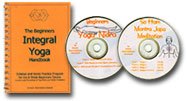
Each week, in an Integral Yoga class, will begin with Yoga Nidra (through your audio CD) followed by the Asanas (as described in your manual), then Pranayamas and concluding with Mantra meditation (your second CD).

This Beginner's Yoga training course is Amazingly Progressive!

Yoga Nidra will progress from a short introduction of 15 minutes in the first week and through more advanced aspects of awareness with each week.

The Asanas or Yoga postures for beginners will progress from very simple Anti-arthritis series through to the Standing and Balancing postures.

The powerful Pranayama techniques begin with a few rounds and go up to more rounds with longer breath controls.

The meditation practice is divided into 4 stages for 2 weeks each.

The Yoga training handbook, which is also included in this Yoga course, covers most of the common questions about Yoga practice.

There is a featured chapter on “Therapeutic Yoga” where you can learn about practices for disorders and ailments.

This Yoga course has been defined as well laid out plans with Performance Sheets which you can fill up each week to know of your progress.

Perhaps one of the most useful features of this Yoga course is that you will dicover how to move beyond the enclosed 8-week Yoga training routine.

It will also teach you how to move to the next level of your Yoga practice.

Listen to What Past Students are saying about this Yoga Course.....

" There wasn't a place to check GREAT (in the feedback) so I guess good will do. I really enjoy the cd's and the book also. I am trying to follow both, but sometimes its hard to spare the time. Great product. " Beverly A Gregg, Birmingham, Alabama

" The Yoga Nidra CD is excellent and Practice everyday. "
Ketna Shah,Englewood, CO

About the Author: Swami Omananda Saraswati, is an Integral Yoga Teacher, yoga therapist, researcher, and author of 6 books on yoga and meditation.

For over 20 years he has conducted public & private yoga classes, seminars, workshops, retreats, and helped many people towards a healthier, more natural lifestyle.
He currently resides and teaches in the state of New South Wales, Australia.

Here's What You Get with this Yoga Course.

A 127-page Yoga training manual that teaches you to practice in an extremely easy-to-follow and practical manner. The Yoga postures (Asanas) are cross referenced and defined, with both English and Sanskrit names.

A 60-minute audio CD with 4 powerful meditation practice sessions that will guide you through the meditative process.

A 90-minute audio CD exposing you to the extremely unique techniques of Yoga Nidra or deep relaxation. Also called psychic sleep.

A whole section on therapeutic Yoga which recommends Yoga practices to follow for over 60 conditions or disorders.

This Yoga Course is also GUARANTEED...

This Yoga training course comes with a 100% no-risk guarantee. If you feel that this beginner Yoga course is not right for you for any reason, just tell us and we’ll refund you Immediately.

This Yoga course will help you achieve physical fitness, freedom from stress as well as mental harmony and relaxation with Integral Yoga. Get onto the Yoga way and you’ll thank yourself forever.

Side Note by Paul Jerard: "A comprehensive beginner Yoga course with this much content, a guarantee, and for such an inexpensive price makes it a valuable gift, as well."

Read More

The Truth about Options for Yoga Teachers, Part 6


By Paul Jerard

Partner Yoga: Usually, Partner Yoga is reserved to workshops or special occasion classes. When I first practiced Yoga, as a child, we did a lot of partner work. In those days, I don’t think we were really concerned with space issues. Kids tend to gravitate toward each other like a “litter of kittens.”

Somehow, Partner Yoga has not grown among adults in the popularity it deserves. In a Partner Yoga class, many students remark at how much they got out of each aspect, including meditation. A relaxation sequence can be performed with the crowns of the two heads being four to six inches apart. This actually creates a more intense form of relaxation.

Marie, my wife, and I used to teach these classes to singles groups. This puts a “new twist” on the term, “blind date.” Our Partner Yoga workshops did serve to get singles more comfortable with each other. So, Partner Yoga can be adapted and re-define the purpose of a Yoga class.

We know that Yoga training helps people in every aspect of health. However, Partner Yoga integrates Yoga with touch, bonding, and sometimes, a bit of humor. All of these, combined with Yoga practice, make for a very healthy activity. Despite all of this, Partner Yoga seems to be resigned to workshops. Partner Yoga is also a good “at home practice” to be shared among loved ones.

Prenatal Yoga: To be blunt - If you are teaching pregnant students without their doctor's approval, and you are not a certified Prenatal Yoga instructor, you are "playing with fire." It is hard enough in a Yoga class to address the needs of all students. For pregnant Yoga students, I recommend a specific Prenatal Yoga class.

This may seem a bit harsh, but Yoga instructors need to protect themselves, legally, as well as the health of all their students. Once you research all the precautions and guidelines for Prenatal Yoga, you will fully understand my point.

Just to “scratch the surface of the iceberg,” here are a few ideas to consider. Prenatal Yoga is a specialist’s field. Just because you briefly covered it in a level 1 Yoga teacher training, does not mean you should enter this field without a specialist education and certification in Prenatal Yoga.
Each trimester is handled differently. The first trimester can be as dangerous as the third trimester, if a student is not receiving specialized Prenatal Yoga instruction. The last trimester is similar to Chair Yoga, but that does not qualify a Chair Yoga instructor to work with pregnant students.

Therefore, if you feel the “calling” to teach Prenatal Yoga, you should enroll in a Prenatal Yoga course. Once you graduate as a certified Prenatal Yoga instructor, you will be glad you did. This is a rewarding field, but you need to be trained properly to become a Prenatal Yoga teacher.

© Copyright 2006 – Paul Jerard / Aura Publications

--------------------------------------------
FREE Yoga Report. FREE Yoga Newsletter.
Bonus: Free Yoga e-Book, "Yoga in Practice."
Visit: http://www.yoga-teacher-training.org
--------------------------------------------

FREE CONTENT: If you are a Yoga Teacher, Yoga studio, blogger, e-zine, or website publisher, and are in need of quality content, please feel free to use my blog entries (articles) – Please be sure to reprint each article, as is, including the resource box above. Namaste, Paul

Thursday, March 30, 2006

Protecting your Yoga Teaching Business


By Paul Jerard


When or if, you want to become a Yoga teacher - would you be thinking of litigation and Yoga? The old saying, “the truth hurts,” applies to legality, ethics, and teaching Yoga. You can always “bury your head in the sand” and hope that you are never involved in a legal battle. After all, what kind of a student would sue his or her Yoga teacher? Doctors must ask each other this question every day. Sorry, but denial will not help you in a court of law.

Instead of denying the obvious, you can take action, by learning how the law applies to your Yoga business. You can also start creating policies that protect your students, and insure that you are giving quality Yoga instruction for the rest of your life.

It has been said that “Knowledge is Power,” and this could never be more true than when it comes down to knowing the “Letter of the Law.” Just like when a Yoga student first learns to develop his or her awareness from Yoga and meditation practice - Yoga teachers must develop an awareness of legality, as it pertains to their Yoga businesses.

For the average Yoga teacher, the thought of litigation, as a result of a student entering his or her Yoga class, is depressing. Many Yoga teachers and interns pursue the rewarding career of teaching Yoga as “Good Samaritans.” Yoga teachers are very often generous with their time, effort, and services.

It is “heartbreaking” for me to tell “giving people,” with the best of intentions, that they can be sued at any time. In this climate of litigation, anyone, even a Yoga teacher, can have a lawsuit filed against them. Defending yourself, in a court of law, can and does, create physical, spiritual, mental, and financial exhaustion.

As a result of this reality, this requires protective action on the part of all Yoga teachers. Look at this as a prevention program and a compliment to your current liability insurance policy. “I didn’t know,” will not save any of us from the wrath of the law.

Review your liability insurance and your release forms. Most Yoga teachers should have their attorney review their release forms. The days of a simple one page waiver form are over. A documented health questionnaire may help you to prevent a sudden legal catastrophe. This is not required, but serves as a tangible document to know each Yoga student a little better.

Just remember that a potential Yoga student has the legal right to refuse to fill out a questionnaire, if they so desire. This does leave you “flying blind,” when teaching Yoga classes to students whose current health condition is a mystery.

Therefore, always mention contraindications for asanas. It would be prudent to have an information packet, with contraindications, and prenatal warnings included. You could also include a slip for Yoga students to sign, which indicates that they have read, and understand, that Yoga can be a risk for some health conditions.

Lastly, it is better to lose a potential Yoga student, than to teach one at the risk of his or her health.

© Copyright 2006 – Paul Jerard / Aura Publications

--------------------------------------------
FREE Yoga Report. FREE Yoga Newsletter.
Free Yoga e-Book: Yoga in Practice
http://www.yoga-teacher-training.org/docs/Yoga-in-Practice-eBook.pdfVisit: http://www.yoga-teacher-training.org/
--------------------------------------------
FREE CONTENT: If you are a Yoga teacher, Yoga studio, blogger, e-zine, or website publisher, and are in need of quality content, feel free to use my blog entries (articles) – Please be sure to reprint each article, as is, including the resource box above. Thank you and Namaste, Paul
--------------------------------------------

Wednesday, March 29, 2006

Yoga Teacher Guidelines for Assisting, Part 1

how to become a certified yoga instructor
By Dr. Paul Jerard, E-RYT 500

What should Yoga teachers know about giving an assist before a potential legal problem arises? Have you ever had an assist that didn’t really help much? Have you ever had a physical assist that hurt you physically or in any way? Do physical assists in Yoga postures make you feel uncomfortable? Is it really necessary for Yoga teachers to give a physical assist?

As most of you already know, a physical assist is for the purpose of adjusting a student into proper alignment in a Yoga class. So, why make such a “fuss” over it? One Yoga student may see something as an assist - while another may feel you have crossed the line into sexual harassment.


What should Yoga teachers know about giving an assist before a potential problem arises? As a Yoga teacher, Yoga instructor, or body worker, you should have clear cut policies concerning many things, but let’s focus on physical assists for now. Your release forms for Yoga students should explain what a student can, and cannot, expect from an assist; and you should get their permission in writing.

This is one good reason why you should never let a new student into a Yoga class without filling out the necessary applications and having a meeting about their expectations. This gives Yoga students a chance to be informed as to what to realistically expect from Yoga. In the process, he or she can agree to a physical assist or refuse it on the spot.

This policy of clear cut information, and an interview before classes, is good for the Yoga teacher and the student. From the start, you are developing the student / teacher relationship and creating a rapport with new Yoga students.


With this said, now you understand one more logical reason why students, who arrive late to a Yoga class, are refused. It is bad enough to contend with interruptions in the flow of your lesson plan. Now, add to this that a Yoga student should do a warm-up before jumping into class. When a student is injured, in one of your Yoga classes, you will ultimately take responsibility.

The previously mentioned scenario has the potential for a liability suit. In the words of a friend and attorney of mine, “Anyone can be sued, but that does not mean every plaintiff will successfully win a case?”

© Copyright – Aura Wellness Center – Publications Division


To see find out more about yoga or to see our selection of affordable courses, including our online yoga teacher training intensives, please use the yoga resources on the right side of this page.

If you are a teacher, yoga studio manager, blogger, e-zine, or website publisher, and are in need of quality content, please feel free to use my blog entries (articles). Please be sure to reprint each article, as is. Namaste!

Monday, March 27, 2006

The Truth about Options for Yoga Teachers, Part 5


By Paul Jerard

Kids Yoga: You really have to be connected to a children’s day care center, private school, or public school, to have large numbers of kids joining your Yoga classes. This may not be the case everywhere, but it reflects the feedback I get from Yoga teachers worldwide.

It is also true for our wellness center in North Providence, RI. Our Kids Yoga class started small but now has a regular following of 20 students per class. To be honest, I brought Yoga into the children’s martial arts classes by integrating Vinyasa Yoga with their regular warm-ups.

The result was children who shed fat, became a bit more muscular, and demonstrated more strength and positive attitudes than ever before. The parents are ecstatic about the results now, but wondered what I was up to, when children in Jujitsu or Karate classes were engaged in Yoga training, as part of the curriculum. The benefits to children who learn Yoga are endless.

This is a non-competitive atmosphere, where a kid can just be a kid. Children, who regularly participate in Yoga classes, do not have to put pressure on themselves, and can learn many life skills, such as enhanced self-appreciation.

If you are going to teach children, make sure you are prepared for them to be your biggest challenge. It is all about keeping their attention span, therefore, split your Yoga class into segments. Classes have to be fun, and you should only address four components such as: posture, breathing, relaxation, and meditation. Keep it simple, and don’t go off into a lecture that will put them to sleep. Kids do not come to Hatha Yoga classes to learn the finer points of Bhakti Yoga.

Always praise each child who participates, as this does help their self-esteem. Many times, Kids Yoga class is similar to a carnival, where every child wins a prize. In this case, always point out the children who try. This atmosphere will create children who follow the best examples; then, praise those children who try to copy. This is a win-win situation for every child in your Yoga class.

If you do not have patience, please do not consider teaching Yoga to children. Teaching a Kids Yoga class is not for every Yoga instructor. You have to be creative, an entertainer, and a guide to become a kids Yoga instructor.

After all, Kids Yoga classes contain aspects of Yoga that many adults have lost track of - from a very silly Lion face, to an extremely serious meditation. When you are giving Yoga instruction to a class full of children, your mind must be as flexible as your body.

© Copyright 2006 – Paul Jerard / Aura Publications

--------------------------------------------
FREE Yoga Report. FREE Yoga Newsletter.
Free Yoga e-Book: Yoga in Practice
http://www.yoga-teacher-training.org/docs/Yoga-in-Practice-eBook.pdfVisit: http://www.yoga-teacher-training.org/
--------------------------------------------
FREE CONTENT: If you are a Yoga teacher, Yoga studio, blogger, e-zine, or website publisher, and are in need of quality content, feel free to use my blog entries (articles) – Please be sure to reprint each article, as is, including the resource box above. Thank you and Namaste, Paul
--------------------------------------------

Sunday, March 26, 2006

The Truth about Options for Yoga Teachers, Part 4


By Paul Jerard

Yoga Hybrids: It could be argued that Pilates is a Yoga hybrid. I don’t want to start a big debate over the Pilates Method. The founder, Joseph Pilates, was truly an innovator and way ahead of his time; he also practiced Yoga and martial arts. Therefore, the roots of the Pilates Method are still clear to see.

Many of the Yoga hybrids are combinations of Yoga with dance, martial arts, and Pilates. If you were to pursue these a bit further you could “re-invent the wheel” or become certified to teach Kripalu DansKinetics, The Method, Yoga Fusion, Yogilates, or Nia.

All of these Yoga hybrids are very active and trendy at this time. Some of them may well pass the test of time, such as the Pilates Method. Only time will tell if a health maintenance system will span generations. If you are looking for an extra niche to add to your Yoga teaching skills, any one of these methods will compliment a Yoga class schedule.

Chair Yoga: There are some Yoga teachers who should not consider this field. If a Yoga instructor does not believe in modifications, props, and tailoring a Yoga class toward the students, he or she should stay away from this rewarding field.

There is a tremendously large demand for Yoga teachers, who are patient, compassionate, creative, and want to help others. This is a Yoga teaching position which demands that you learn about ailments, anatomy, physiology, kinesiology, and physiology, on a steady basis. Continuing education is a very important part of a Chair Yoga teacher’s job.

As the Baby Boom generation ages, this “spells out” job security for Yoga instructors who wish to specialize in Chair Yoga. There is no better time than right now to get started, and Chair Yoga will continue to be in need for decades to come. Unfortunately, I do not have enough time for the demand for all of the Chair Yoga classes in my little corner of Rhode Island.

In the past, I have trained Yoga teachers to specialize in this field. The demand to fill the local needs of nursing homes, seniors centers, gated communities, assisted living, adult day care, and physical rehabilitation centers, is far greater than the number of Yoga teachers. This is just the “tip of the iceberg,” and my mornings are full with teaching Chair Yoga sessions in the Greater Providence area.

Lastly, the current Chair Yoga teaching opportunities are many, and this particular field is still in its infancy. You will never find a more appreciative group of students, than you will find by teaching a Chair Yoga class.

© Copyright 2006 – Paul Jerard / Aura Publications

--------------------------------------------
FREE Yoga Report. FREE Yoga Newsletter.
Bonus: Free Yoga e-Book, "Yoga in Practice."
Visit: http://www.yoga-teacher-training.org/
--------------------------------------------

FREE CONTENT: If you are a Yoga Teacher, Yoga studio, blogger, e-zine, or website publisher, and are in need of quality content, please feel free to use my blog entries (articles) – Please be sure to reprint each article, as is, including the resource box above. Namaste, Paul

Friday, March 24, 2006

The Truth about Options for Yoga Teachers, Part 3


By Paul Jerard

Power Yoga: Many things come to mind when we hear the words “Power Yoga,” but the roots of Power Yoga are usually related to Ashtanga Yoga. This is not always the case, but more often, than not, Power Yoga is an offshoot of Ashtanga Yoga.

Thinking about Power Yoga may conjure up vivid images of Yoga teachers like Beryl Bender Birch, Bryan Kest, or Baron Baptiste. This is a vigorous form of Ashtanga Yoga with a Western “twist.” Classes are usually filled with younger adult Yoga students and active athletes.

These are not classes for Yoga students with ailments, or for beginners who just “jumped off the couch.” Power Yoga is a fantastic system of Yoga exercises, but if you are going to teach any form of Power Yoga classes, you have to be completely honest with prospective students. The physical challenge of a Power Yoga class is not for everyone who wants to learn a form of Hatha Yoga.

For example: A middle-aged, inactive, beginner Yoga student, should be guided to a gentle Yoga style, if he or she wants to pursue the study of Hatha Yoga. This student will learn the basics, safety guidelines, and contraindications that apply to his or her body. After a few months of regular practice, this Yoga student will see the path of infinite possibilities open, and then make an educated choice from what he or she has learned.

The injury of a student, due to the desire for a Yoga teacher’s desire to “fill up classes,” is morally and ethically wrong. Complete honesty with students is not often taught when we are trained to become a Yoga teacher. Yoga teachers are often trained to be gentle guides along the path toward total health.

Being completely blunt about a prospective Yoga student’s limitations - might be bad for business. However, whenever a student is injured, the Yoga instructor will often feel remorse, even if the situation was completely unforeseen. The above-mentioned scenario, of an unfit student going into a vigorous Yoga class, can easily be seen. If you do not have a questionnaire for new Yoga students, you should design one now, even if you have never had a single problem.

This is not meant to “steer you away” from teaching Power Yoga classes or to prevent you from learning to become a Power Yoga instructor. Power Yoga classes are very rewarding to participate in and to teach.

When considering the needs of new Yoga students, always be diplomatic, and guide potential Yoga students toward their best choice. Unfortunately, this sometimes means we must guide them to the Yoga teacher down the street.

© Copyright 2006 – Paul Jerard / Aura Publications

--------------------------------------------
FREE Yoga Report. FREE Yoga Newsletter.
Free Yoga e-Book: Yoga in Practice
http://www.yoga-teacher-training.org/docs/Yoga-in-Practice-eBook.pdfVisit: http://www.yoga-teacher-training.org/
--------------------------------------------
FREE CONTENT: If you are a Yoga teacher, Yoga studio, blogger, e-zine, or website publisher, and are in need of quality content, feel free to use my blog entries (articles) – Please be sure to reprint each article, as is, including the resource box above. Thank you and Namaste, Paul
--------------------------------------------

The Most Important Yoga Pose When You are on the Go


By Foras Aje

With over 84, 000 poses in yoga to choose from for practice, yoga enthusiasts and practitioners might be left confused on just which ones are the most important.

With our daily demands and commitments, most of us might not have the time to perform so many poses therefore we should focus on the one that is of the most benefit for daily practice and that is the Shoulder-Stand (known in Sanskrit as Savangasana).

It is my recommended favorite of the inverted poses. Its ease and reminder that as a kid, you tried it before, makes it one that I emphasize even more so than the Headstand you might be familiar with as they share almost if not all the same benefits without the fear of standing on your head.

Inverted poses reverse the action of gravity on the body. Instead of everything being pulled towards the feet, the orientation shifts towards the head. On emotional levels the Shoulder Stand turns everything upside down throwing a new light on old patterns of behavior.
It improves health, reduces stress and anxiety and increases mental power and also increases self confidence. In addition, the abdominal organs, liver, spleen, stomach, kidneys and pancreas receive a powerful massage helping them work better.

In Sanskrit, Sarvanga means all parts so as the name suggests, it affects all the bodily organs. It stimulates the thyroid gland, balancing the circulatory, digestive, nervous, reproductive and endocrine systems. It is indeed a panacea, a cure all. Obesity and corpulence are alleviated by this pose as well as constipation and enlargement of the liver and the spleen.
It is best practiced with its counter poses in specific durations for maximal efficiency and when planned correctly, the whole sequence could take less than 6 minutes to carry out, depending on your schedule.

Personally, I make the point as a practitioner to incorporate the sequence into my daily regimen with other forms of exercise, but I always place the most emphasis on this one pose for all the benefits above.

So next time when you are unsure of which pose you have to include in your session when you are on the go, make it a point to go for the Shoulder-Stand. Your body will thank you for it.

Discover proven ways of attaining improved health with the all-natural methods of a proper diet, Yoga and positive thinking. Download your preview or simply print out the free information at http://www.bodyhealthsoul.com/yoga.htm

Thursday, March 23, 2006

The Truth about Options for Yoga Teachers, Part 2


By Paul Jerard

At the very least, a Yoga teacher should have knowledge of the latest trends in Yoga classes, and the latest continuing education options for Yoga teachers. If something does appeal to you, there are many different continuing education options available for Yoga teachers. There are a number of workshops, seminars, and camps around the world for interns and established Yoga teachers.

If you already have a running Yoga studio, children, or responsibilities at home, onsite Yoga teacher training may not always be the best option. You may want to consider Yoga distance learning, also known as “Yoga Home Study,” as a viable option. This is a recognized form of continuing education for Yoga instructors by most of the certifying bodies.

Due to time constraints, family commitments, and working a full time job -Yoga teachers often find Yoga teacher training correspondence courses to be a convenient way to expand on their existing knowledge of Yoga.

Now, let’s take a close look at options for specialization in the Yoga teaching profession.
Hot Yoga: Obviously this is self-explanatory and requires a tolerance to heat - in the neighborhood of 105 degrees Fahrenheit. Most Hot Yoga classes are based upon Bikram Choudhury’s style of Hatha Yoga.

However, it is extremely unwise to copy his exact sequence of postures, as they are patented. Regardless of whether you think it is right or wrong to patent a Yoga sequence, who wants to go to court over it? It never ceases to amaze Yoga teachers when they hear about the potential to be sued. In order to by- pass this dilemma, teaching a Hot Yoga class can be accomplished without a legal battle.

What I see most Hot Yoga teachers do is somewhat similar to Bikram’s style, but you may also see Sun Salutations and a variety of postures that are not seen in most Bikram studios. Hot Yoga classes are popular for all ages. There are a surprising number of Yoga students who are beyond middle age in these Yoga classes.

Some people love the heat, while others simply cannot adapt to these temperatures. Therefore, if you want to become a Hot Yoga instructor, make sure that you are up to the task of leading a Yoga class under these temperature conditions. It is one thing to take a Hot Yoga class, but it is quite a different experience to actually teach one.

© Copyright 2006 – Paul Jerard / Aura Publications

--------------------------------------------
FREE Yoga Report. FREE Yoga Newsletter.
Free Yoga e-Book: Yoga in Practice
http://www.yoga-teacher-training.org/docs/Yoga-in-Practice-eBook.pdf
Visit: http://www.yoga-teacher-training.org/
--------------------------------------------
FREE CONTENT: If you are a Yoga teacher, Yoga studio, blogger, e-zine, or website publisher, and are in need of quality content, feel free to use my blog entries (articles) – Please be sure to reprint each article, as is, including the resource box above. Thank you and Namaste, Paul
--------------------------------------------

Wednesday, March 22, 2006

The Truth about Options for Yoga Teachers, Part 1

By Paul Jerard
When, or if, you decide to become a Yoga teacher, you should start with a basic Yoga teacher training course that gives you an overview of all of the fields within Yoga. If you decide to specialize, it is best to do it when the need becomes apparent. This is not always the case for every Yoga instructor. For example: You may have a calling for Prenatal Yoga or Kids Yoga.

This is fine - as Yoga teachers, and Yoga practitioners, we all understand passion. However, please make sure there is a market for the Yoga teaching niche you desire in your local area. After you get your “feet wet,” teaching Yoga to different groups, you will more accurately see your own destiny.

This may not happen right away, and some Yoga instructors are very comfortable working with the “general population.” When I look at my weekly schedule, I teach Yoga to kids, seniors with various levels of mobility, Gentle Yoga to a targeted middle aged group, Restorative Yoga (which also attracts students in the middle-aged range), Vinyasa Yoga classes to students in the 20 to 30 years of age range, and private sessions, which can cover just about anything.

To be honest, this is not for everyone, but if you teach Yoga full time, you tend to go where the needs are. Yoga students will seek you out, and you may have a specialized market that “screams” for your help. This will guide you toward a needful population of motivated Yoga students.

This is exactly what happened to me with Chair Yoga. When I received a call from a local senior center for Yoga classes, I had no idea it would become so popular. That led to filling up my morning Yoga class schedule, Later, I trained Yoga instructors, in my area, to address a need that is far beyond my ability to fulfill. The fact is, more Chair Yoga teachers are needed right now.

In our next section, we will go over some options for Yoga teachers, who have students, or potential students, seeking a specific form of Yoga instruction. Some of these niche markets will give you no passion at all, but it is good to look at your teaching options and then decide which sort of Yoga training you want to get involved in.

Always remember to keep an eye on which forms of Yoga are in demand, even though they may not appeal to you personally.

© Copyright 2006 – Paul Jerard / Aura Publications

--------------------------------------------
FREE Yoga Report. FREE Yoga Newsletter.
Free Yoga e-Book: Yoga in Practice
http://www.yoga-teacher-training.org/docs/Yoga-in-Practice-eBook.pdf
Visit: http://www.yoga-teacher-training.org/
--------------------------------------------
FREE CONTENT: If you are a Yoga teacher, Yoga studio, blogger, e-zine, or website publisher, and are in need of quality content, feel free to use my blog entries (articles) – Please be sure to reprint each article, as is, including the resource box above. Thank you and Namaste, Paul
--------------------------------------------

Friday, March 03, 2006

Facts about Successful Yoga Teachers, Part 4


By Paul Jerard

In the last part of this series, let’s pick up where we left off about success as a Yoga teacher. With regard to attracting, and keeping your Yoga students, it is not easy to do both. Many Yoga teachers focus on bringing new students in the front door, without considering the more important needs of their “established students.”

Do you have survey forms for your Yoga students? You should – and also give them a reward for their participation. They are helping you learn what they want, and this is something you cannot afford to speculate on. This is one of the many ways your Yoga students become your teachers.

Once you sit at the front of the class, and begin to teach Yoga classes, you can no longer visualize a class as a student. This is why I like to visit classes that are taught by my staff. This gives me a unique viewpoint, and I can better understand what a student may require from his or her Yoga instructor.

However, this is not enough; and many of us need some true feedback to clarify what is needed within the Yoga studio or ashram. You are not really a client or a student anymore, so it is difficult to visualize their point of view.

In turn, tell your students the truth about everything. Tell them about the realistic expectations of Yoga practice. Let your students know what is expected of them. Yoga students should know that they have to practice regularly. Yoga is more than a once a week commitment. How could any of us expect to make significant progress by attending a Yoga class once per week?

Keep your classes interesting. If you get a stale feeling, and feel like you are in a rut, then your students probably feel the same way.

Lastly, when you travel around town, and someone asks what you do, what do you say? If your answer is, “I’m a Yoga teacher,” it may mean nothing to a person who knows very little about Yoga.

Do you teach meditation, stress management, work with kids, work with seniors, help people with ailments, teach a very physical style, or something else? What makes your method of teaching Yoga different from the rest? You are better off explaining the benefits of your particular style, than to label it “Vinyasa Yoga,” for example.

If you say you are a Vinyasa Yoga teacher, you may have just said two words that a prospective student does not understand. They might ask you, “What is Vinyasa Yoga?” Also, they might just sit there nodding like they understand you, and walk away without asking, for fear that they will seem unintelligent.

Tell people what you do in descriptive terms, and make sure they understand the particular benefits of the Yoga you teach.

© Copyright 2006 – Paul Jerard / Aura Publications

--------------------------------------------
FREE Yoga Report. FREE Yoga Newsletter.
Bonus: Free Yoga e-Book, "Yoga in Practice."
Visit: http://www.yoga-teacher-training.org
--------------------------------------------

FREE CONTENT: If you are a Yoga Teacher, Yoga studio, blogger, e-zine, or website publisher, and are in need of quality content, please feel free to use my blog entries (articles) – Please be sure to reprint each article, as is, including the resource box above. Namaste, Paul

Facts about Successful Yoga Teachers, Part 3


By Paul Jerard

Do successful Yoga teachers produce more successful teachers? The short answer is, “Yes, they do.” Tirumalai Krishnamacharya produced many good Yoga teachers, but how many of us could match his accomplishments? Among his many Yoga students are four Master Yoga teachers: Pattabhi Jois, B.K.S. Iyengar, Indra Devi, and T.K.V. Desikachar.

Therefore, most of the Hatha Yoga sub-styles of today have been affected by Tirumalai Krishnamacharya. His legacy has cast a long shadow, and his accomplishments may never be matched. To some, this is success and to others, success is simply helping people with health and well being.

While others, might consider Bikram Choudhury, to be the most successful Yoga teacher of our time. It is said that his style produces, in the neighborhood of, 900 Yoga teachers per year. Not bad, considering he had a serious knee injury as a teen and made quite a come back. He aggressively markets his style of Yoga, has patented his asana sequence, has been in the American “lime light,” and lives a very wealthy life.

So, this is a very different form of success. In his own right, Bikram Choudhury is one of the most successful Yoga teachers of this time, and he has produced many more successful Yoga teachers. Success means many things to many people, and we each have a different viewpoint of the meaning of success. Success can be easily classified into physical, mental, spiritual, and material categories.

What about Yoga teachers who demonstrate technical prowess? Yes, a Yoga teacher who understands alignment should be successful. Unfortunately, perfect alignment is not abundant. The human body has many imperfections, and this can be a struggle if a Yoga teacher becomes a perfectionist.

This can sometimes affect the ego of a Yoga teacher for the worst. The teaching style should still be compassionate - when assisting or demonstrating Yoga techniques. When an instructor of Yoga becomes arrogant and self-absorbed, he or she will start to lose students, among many other things.

Is success measured by how many Yoga students you have? To put it simply: “No.” Many successful Yoga teachers have small schools, but their agenda is not materially based. They enjoy helping others and improving the lives of their Yoga students. This is definitely success and gratification.

However, if you want to earn a living - have financial obligations, or just want to be comfortable, your life will be much easier, when you have more Yoga students.

© Copyright 2006 – Paul Jerard / Aura Publications

--------------------------------------------
FREE Yoga Report. FREE Yoga Newsletter.
Free Yoga e-Book: Yoga in Practice
Visit: http://www.yoga-teacher-training.org/
--------------------------------------------
FREE CONTENT: If you are a Yoga teacher, Yoga studio, blogger, e-zine, or website publisher, and are in need of quality content, feel free to use my blog entries (articles) – Please be sure to reprint each article, as is, including the resource box above. Thank you and Namaste, Paul
--------------------------------------------

Friday, February 24, 2006

Facts about Successful Yoga Teachers, Part 2


By Paul Jerard

How do you define success for a Yoga teacher? Each Yoga instructor will have a different answer. What is important to one Yoga teacher may be of little importance to another. However, each Yoga teacher has the passion for Yoga within him or her.

This is the common denominator within all instructors of Yoga.

Is success measured by your contribution to the common good? If you are helping people through teaching Yoga, then it must be so. Yoga has many aspects, but all of them are for healing and helping people.

If you have a student who is financially unable to pay, would you turn him or her away? Most Yoga teachers would find a way to help a student in need, regardless of the finances involved.

However, there is a big difference between a student who cannot afford to pay you and one who does not want to pay you. The difference is the perceived value of Yoga and his or her present financial circumstances. The poor see a value in Yoga, if they need it, but cannot afford it.

Here is an extremely special case: There was a potential Yoga student who told me he was “financially strapped” and could not afford to pay for Yoga lessons, but he desperately needed them for his back problems. He explained his case and had me convinced that I should help him at an extreme discount.

Unfortunately for him, one of my students, (his neighbor), recognized him on the way out. My student was almost in tears holding back his laughter. He told me to look down the street for the poor man’s car. You could not see it from my office, but I made it to a different window in time to see his “brand new” Mercedes S Class drive off.

Upon further investigation, this potential student owned many luxury cars, a home with a garage the size of a house, a vacation home, and a thriving business. So, why did he do it?

Why did he waste my time with a fabricated story? It is quite simple: Although his character may be in question, he saw Yoga as worthless, of no value, and it was just something that might be fun to “steal.” In fact, he “toyed” with my compassion, my passion for Yoga, and my need to be needed.

This is an extreme case, and I am not trying to create cynicism. However, always be aware of the difference between those people who truly need you and those who see your time, contributing to the common good, as worthless.

© Copyright 2006 – Paul Jerard / Aura Publications

--------------------------------------------
FREE Yoga Report. FREE Yoga Newsletter.
Visit: http://www.yoga-teacher-training.org/
--------------------------------------------
FREE CONTENT: If you are a Yoga teacher, Yoga studio, blogger, e-zine, or website publisher, and are in need of quality content, feel free to use my blog entries (articles) – Please be sure to reprint each article, as is, including the resource box above. Thank you and Namaste, Paul
--------------------------------------------

Facts about Successful Yoga Teachers, Part 1


By Paul Jerard

Should a Yoga teacher take money for classes? How do you define success for a Yoga teacher? Is it your contribution to the common good? Is it by producing successful teachers? Is it by technical prowess? Is it by how many students you have? Or, is it a combination of these factors?

First things first: Are you “selling Yoga?” If you accept a fee for teaching Yoga, no matter how small or large, you are selling Yoga. If you do not like my frank approach to this issue, then teach Yoga for free. This is not a problem, and that is good Karma Yoga.

However, do not open next to a commercially aggressive Yoga studio or ashram. If you decide to do this, you will see your finances “crash and burn” - while your students flock to the wealthy Guru down the street. Yoga students often think that free Yoga is “junk.”

Once upon a time, I taught free Yoga too. It is not easy to explain a passion to your family, which drains your finances and challenges the quality of your life on a daily basis. If you keep teaching Yoga for free, you will lose a lot of sleep, before you live on the street, with the homeless, or finally, start charging for Yoga lessons.

It is amusing when very wealthy Yoga Gurus claim Yoga is not for making money. My answer: “Excuse me, how did you acquire all that wealth?” Why would a rich Yoga Guru lead anyone to think that taking a payment for teaching Yoga is wrong?

This is why we should appreciate Bikram Choudry’s candid remarks. He says what he thinks and makes no secret about living a life of luxury, due to teaching Yoga. At least, he is honest about his ideas, and he is not a hypocrite.

Therefore, if you accept payments from your students, be honest with yourself. You can always use the money to help others, but you need to pay your overhead costs, eat, and sleep with a roof over your head, first.

If you still feel bad about taking money for teaching Yoga, please open a studio down the street from my North Providence location. We will regularly donate toward your meals at the local soup kitchens. I hope you clearly see my point. So, please do not listen to anyone who tells you that taking money for teaching Yoga is wrong.

Whether a Yoga teacher is rich or poor, a successful Yoga teacher does not worry about money – the universe will supply it.

© Copyright 2006 – Paul Jerard / Aura Publications

--------------------------------------------
FREE Yoga Report. FREE Yoga Newsletter.
Visit: http://www.yoga-teacher-training.org/
--------------------------------------------

FREE CONTENT: If you are a Yoga Teacher, Yoga studio, blogger, e-zine, or website publisher, and are in need of quality content, please feel free to use my blog entries (articles) – Please be sure to reprint each article, as is, including the resource box above. Namaste, Paul

Wednesday, February 01, 2006

Find the Right Yoga Teacher and Yoga Class for You


By Stephen Kreutzer

Though there are most likely at least half a dozen yoga studios and gyms that offer yoga classes in your neighborhood, finding the one class and the right teacher to suit your needs is not always easy. Start at the beginning with these steps and when you have completed all of them you are sure to have located the best yoga class and teacher combination for your schedule, location, interest, and temperament.

* What are your choices? The telephone book, the internet, community newspapers, ad boards at your local health food store or organic grocery store – all of these are great ways to find out what is available to you. Spread the word that you’re looking for a good class. Your dental hygienist may turn you onto a class you’ve never heard of or your librarian may moonlight as an instructor on the weekends. You never know until you start looking.

* When would you like to take your yoga class? Some people prefer to start their day very early with an energizing yoga class. Others like to wind down after work with a long, relaxing class and still others prefer to pop in a 20 minute yoga class every day during lunch or once a week on Saturday mornings. Determining when a class will best fit into your schedule will help you narrow down your choices.

* Which yoga classes are most convenient to you? After you have chosen the best time for you to take your class, consider where you will be just before then. Are you coming from home or work? Do you need something to fill the time while your youngest takes his gymnastics class and therefore need a class near there? Finding one that is close to where you are at the time that you want to take the class will help you maintain an effective, consistent practice.

* What type of yoga is taught at the schools that are close to where you want to be when you want to take your class? If you’re a beginner, you may not want to jump into a dynamic Ashtanga yoga class. If you’re more advanced, then a mild Kripalu yoga course may not be what you’re looking for to push your limits. Call the schools and centers that are left on your list and ask them to send you a list of classes they have available. From these, you will be able to see what is available during the time slots you have open.

* Try them out! Most yoga schools and centers allow you to take one class without signing up for 10 weeks worth of practice. Experiment and try out all the classes that interest you. If you find more than one that appeals to you, maybe you can switch back and forth. If none are what you’re looking for, then go back to your original list and expand your parameters or see if there are any yoga schools that you’ve overlooked. Soon you’ll find the perfect class and the perfect teacher for your yoga practice.

About the author: Stephen Kreutzer is a freelance publisher based in Cupertino, California. He publishes articles and reports in various ezines and provides yoga resources on http://www.justyoga.info/

Find Your Inner Calm

A relaxed day begins with a good night’s sleep. Aura Wellness Center offers an online Yoga Nidra course which includes content to help you l...